The contract can deliver those rights exactly as promised without proving that the sponsor acquired profitable customers. Delivery and business return are two different measurements.
Start with inventory, not the announcement photo
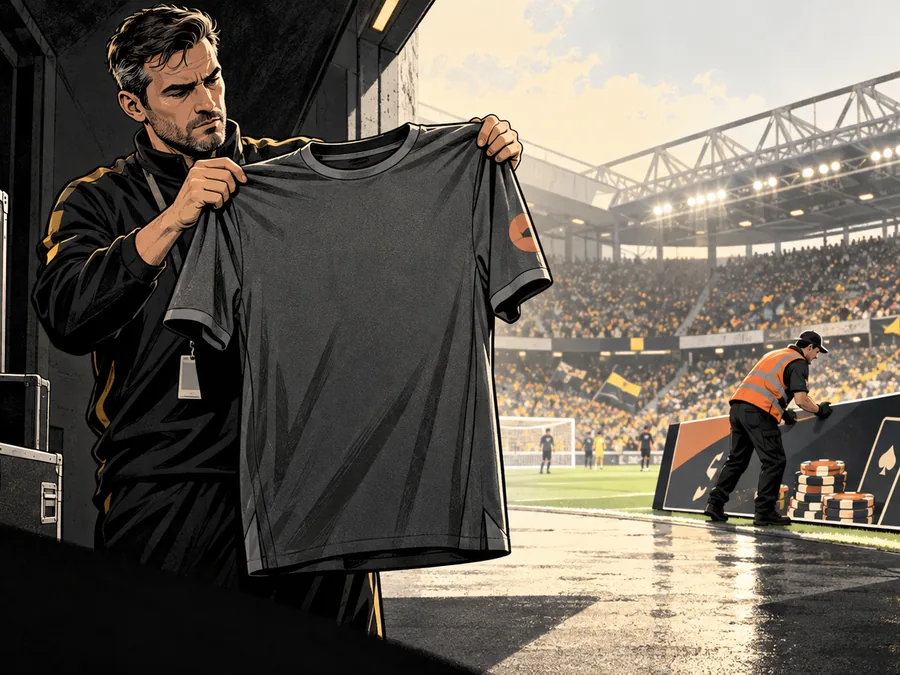
UEFA’s 2024 announcement of bet365 as a Champions League partner identifies several concrete surfaces: in-game perimeter LED boards, media backdrops and Champions League digital channels. It also describes a ticket giveaway in selected countries as a launch activation. UEFA’s partnership announcement
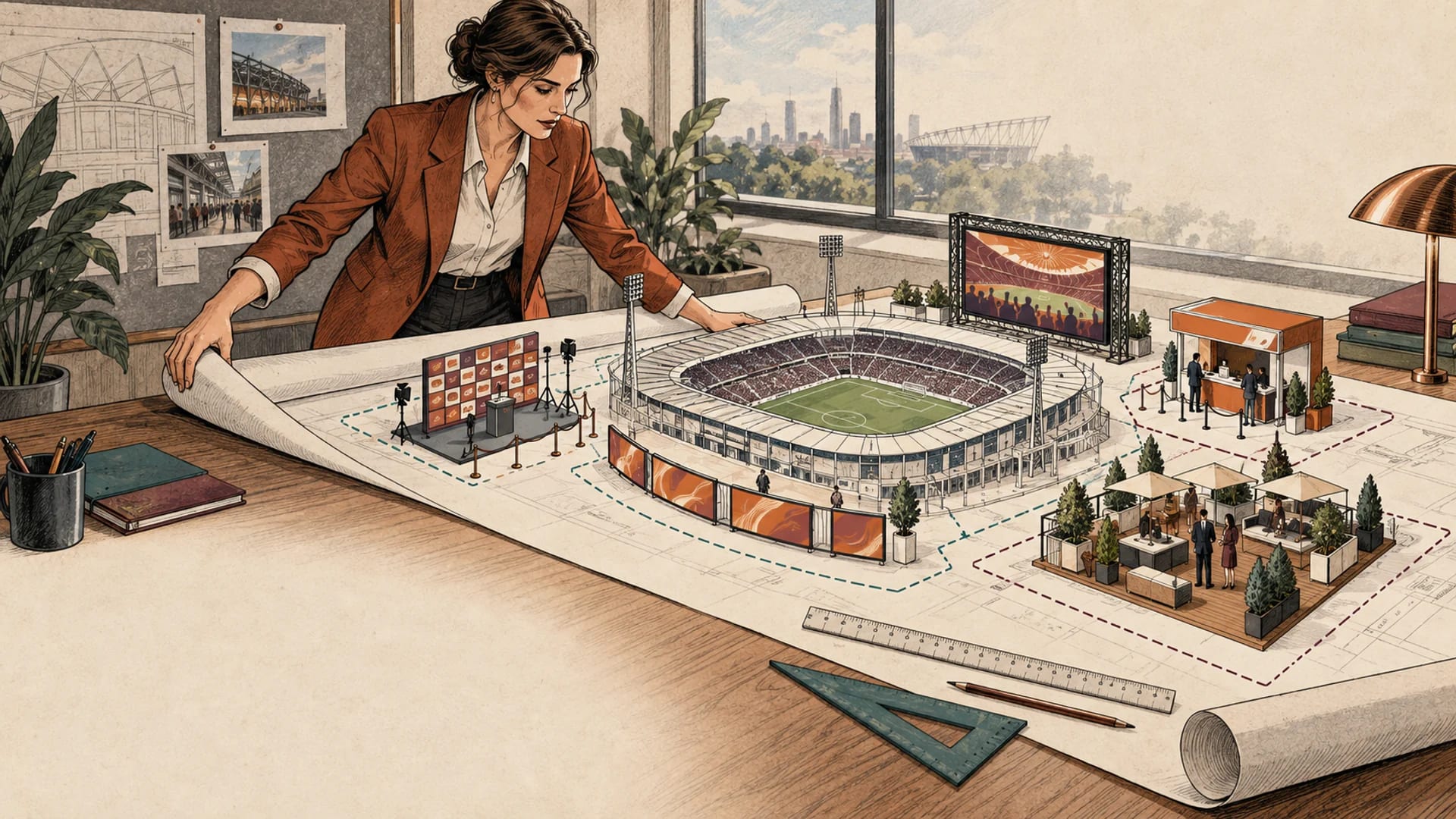
That list is more useful than the generic word “exposure.” It separates three kinds of inventory:
broadcast-visible assets, such as perimeter boards captured by match cameras;
event and media assets, such as interview backdrops;
owned digital assets, where the competition controls the publishing channel.
The ticket activation is different again. It gives the sponsor a promotional mechanic linked to attendance rather than another logo placement.
The price of the UEFA agreement was not disclosed in that announcement, so it should not be estimated from another partnership. Rights packages differ by territory, duration, category and inventory.
Designation and exclusivity are products too
The words a sponsor may use have value. “Official partner” is a licensed designation, not a general description. It lets the brand connect itself to the property within the boundaries of the agreement.
Exclusivity can make that designation scarcer. UEFA’s 2026/27 Champions League rules say UEFA controls the competition’s commercial rights and may appoint partners with exclusive rights in certain product or service categories. The rules also restrict clubs from selling associations with competition data that would interfere with that exclusivity. UEFA Article 70
This is why a sponsorship asset is not simply a rectangle on a board. It can include protection against a direct competitor receiving equivalent association, together with permission to use competition marks in approved materials.
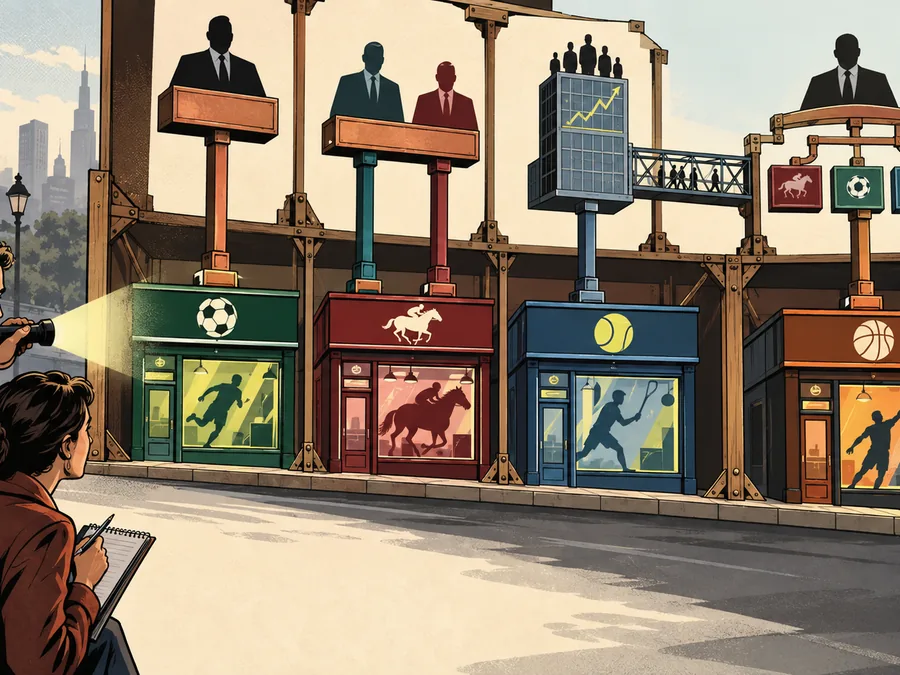
The boundary matters. Kit inventory, club rights, competition rights, media rights and data rights may be controlled by different parties. A club cannot necessarily sell every surface visible during its matches.
Media alliances show the wider menu
Not every sportsbook-media deal is a sports sponsorship. PENN Entertainment’s 2023 agreement with ESPN was a brand and media alliance around a sportsbook, but its public filing is useful because it itemised rights that often sit behind broad partnership language.
The disclosed package included an exclusive US licence to use the ESPN BET trademark, promotion through odds attribution and editorial or digital-product integrations, access to talent, traditional media and content sponsorships. PENN retained daily sportsbook operations and customer relationships. The filed transaction presentation
That separation is fundamental. Media rights did not transfer control of the sportsbook or its customer ledger to ESPN. A sponsor can rent association and distribution while the regulated operator remains responsible for the betting product.
Our sportsbook ownership guide makes the same point at company level: brand, owner, licence and commercial partner are not synonyms.
Activation is how a right becomes visible
A contract may permit a ticket promotion, content series, hospitality programme or use of marks. The sponsor still has to produce and distribute the activation. That usually requires creative work, media spend, approvals, market exclusions and compliance review beyond the rights fee.
This is one reason comparing headline deal values can mislead. The rights fee is not necessarily the full campaign cost. Production, paid distribution, promotions, staff, hospitality and measurement can sit outside it.
Regulation also narrows how rights can be used. UK CAP guidance published in June 2026 says the sponsorship arrangement itself may sit outside the non-broadcast advertising code, while ads and promotional communications created under it can fall within the code. A contractual right to use a club logo does not override gambling-advertising rules, including restrictions concerning strong appeal to under-18s. ASA/CAP sponsorship guidance
Buying a logo licence therefore buys permission from the rights holder, not immunity from advertising law or platform policy.
Three measurement layers
The cleanest way to evaluate a sponsorship is to keep three layers apart.
| Layer | Question | Example evidence |
|---|---|---|
| Rights delivery | Did the property supply what the contract promised? | Board minutes, digital placements, content units, tickets, hospitality and territorial delivery |
| Audience response | Did the intended audience notice or interact? | Validated reach, viewability, brand study, searches, visits or activation participation |
| Business outcome | Did behaviour create durable value? | Qualified registrations, retained customers, permitted cross-sell or another pre-agreed outcome |
The first layer can be audited directly against the inventory. The second needs a defensible audience method. The third requires attribution rules agreed before the campaign, including what counts, how long the window remains open and which markets are eligible.
No single metric answers all three. Broadcast impressions do not prove registration. Registrations do not prove retention. A brand-lift survey does not reconcile to an operator account ledger.
The termination test
The PENN–ESPN alliance also illustrates why a launch announcement is not an outcome report. The parties ended the agreement early in December 2025. PENN’s SEC filing says brand use, integrations, exclusivities and planned traditional media purchases ceased, and the sportsbook was rebranded to theScore Bet. The termination filing
ESPN said at the time that the arrangement had driven users into PENN’s ecosystem. PENN nevertheless changed direction. Both facts can coexist: a media package may deliver traffic and still not satisfy the longer-term economics or strategic fit expected by both parties.
That is why a renewal, exit or impairment disclosure can be more informative than a launch-day reach claim.
The questions a buyer should settle first
Before valuing a sportsbook sponsorship, define the package in operational language.
Which entity owns each right, and can it grant category exclusivity?
Which surfaces are guaranteed, which are subject to scheduling and which require separate media spend?
In which countries may the sponsor activate, and which audiences must be excluded?
Who approves creative, talent, marks and promotional mechanics?
What is the make-good if an event, placement or asset is unavailable?
How will delivery, audience response and business outcome be measured separately?
Which rights, data and content survive termination?
The answers turn “global exposure” into something finance, legal, media and compliance teams can inspect.
A sportsbook sponsorship buys contracted access to attention and association. The property must deliver the inventory; the sponsor must activate it responsibly; neither side should call the business result before the evidence arrives.