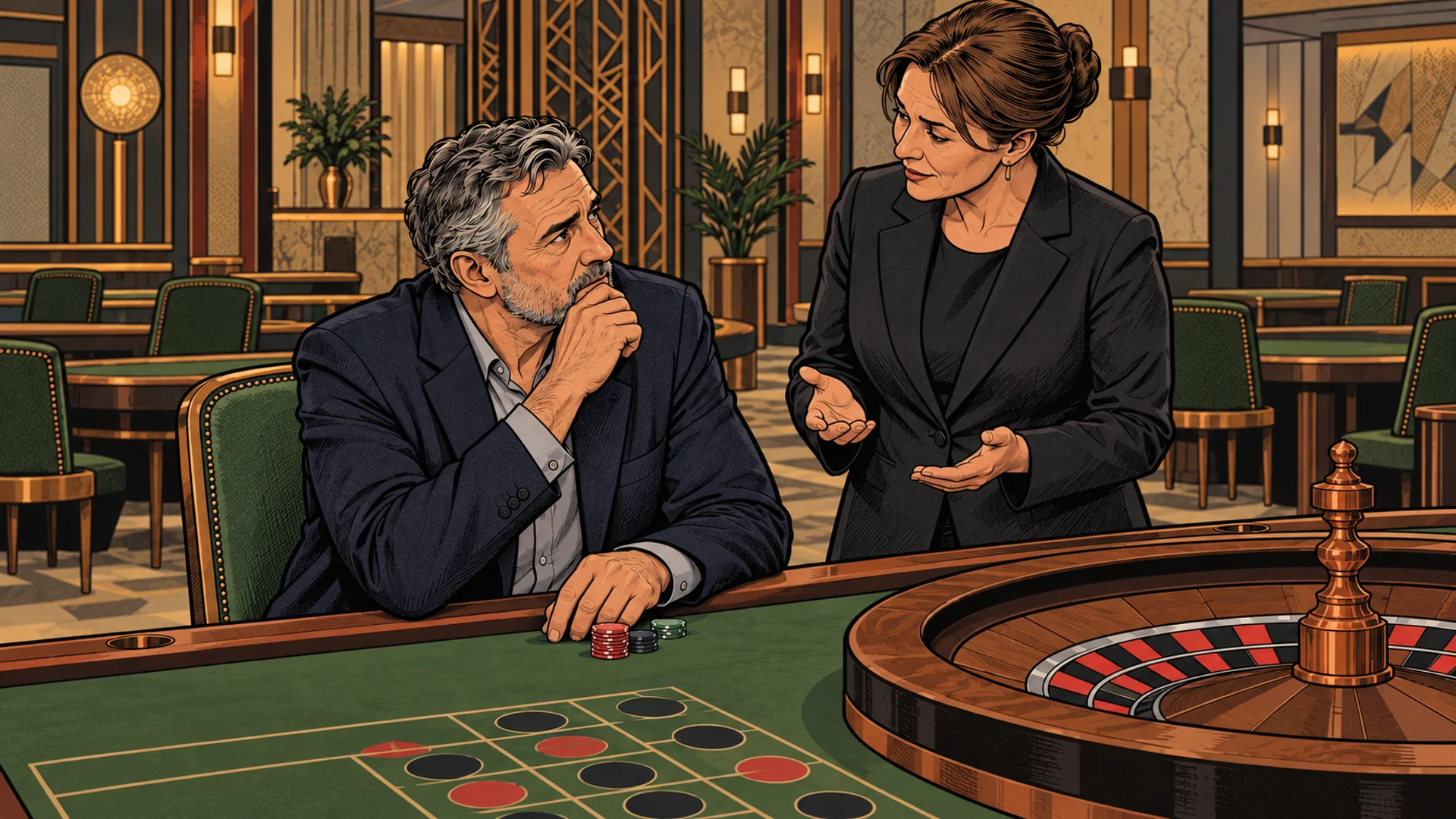
Customers returning from a period of self-exclusion were allowed to keep gambling and lose heavily at Grosvenor venues, Britain's Gambling Commission said on 7 October 2026. Its investigation also found repeated safer-gambling conversations that failed to change customer behaviour or prompt stronger restrictions.
The findings form part of a regulatory settlement covering Rank Group PLC-owned Grosvenor Casinos Limited, Grosvenor Casinos (GC) Limited and Gaming Group Limited. Together, the three legal operators run 51 casinos across Great Britain, according to the Commission's announcement.
The announcement rounds the payment to £5 million. The detailed public statement gives the exact figure: £5,012,261 in lieu of a financial penalty, agreed on behalf of Grosvenor Casinos Limited and the wider group. The money goes to the government's Consolidated Fund. Investigation costs are separate, with no amount specified.
Conversations that did not stop the losses
In one case, a customer playing with verified winnings from another operator lost about £25,000 before safer-gambling interactions began. Staff subsequently held several interactions about the frequency and duration of visits. They did not escalate to restrictions until the customer acknowledged that the winnings had run out, the public statement says.
Even then, the customer was allowed to lose about £11,000 over the following six weeks before a suspension. The Commission includes this customer among individuals who had returned from self-exclusion and were permitted to play with significant funds and lose heavily.
The statement also describes repeated loss and play-frequency alerts that did not alter behaviour, with losses exceeding £73,000 in the record it examined. The regulator found no evidence that such events informed policy changes or staff reminders and retraining.
Other records showed no recorded safer-gambling interactions for a long-standing customer who won approximately £260,000 over a short period and then lost around £250,000 in 12 days. The Commission reports both amounts without establishing the customer's overall financial position.
These losses are examples from the investigation, not new legal thresholds for intervention. Our feature on gambling reminders and reality checks examines what different prompts tell a player. In this case, the regulator questioned staff's failure to evaluate whether their interactions worked.
A settlement covering financial checks too
The review also found anti-money-laundering failings. Policies had not properly accounted for changes to the Money Laundering Regulations in 2020; risk decisions were inconsistent and enhanced due-diligence checks were missing when the operator's own policies required them. Our explanation of source-of-funds checks separates evidence about the origin of money from proof of affordability.
The public statement records a targeted assessment at one venue on 13 June 2025, during the licence review. The findings published on 7 October 2026 concern land-based casinos in Great Britain.
The Commission said the licensee swiftly introduced changes intended to remedy the failings and fully cooperated with its investigation. It also noted previous formal advice about similar concerns. An external third-party audit is required within six months of the licence review's conclusion. The statement does not give that conclusion date, so a specific calendar deadline cannot be established from it.