
Series: Product Room
Roulette odds: why 35:1 is not a one-in-35 chance
A roulette paytable states profit, not the chance of winning. Read the 37- and 38-pocket models, returned stakes and the zero rules that change the arithmetic.

Read the game beyond the screen. Odds, payouts and the small print behind roulette, slots and live tables.
A roulette paytable states profit, not the chance of winning. Read the 37- and 38-pocket models, returned stakes and the zero rules that change the arithmetic.
The zero, the payout table and what changes when a multiplier enters the round.

A racetrack selection can place several stakes in one action. Count the pockets, follow zero around the rim and distinguish Voisins from ordinary neighbours.
A streak can look remarkable without changing the next result. Separate a six-spin prediction from a next-spin probability, and a roulette wheel from a finite deck.
A fixed 100-spin model shows how stake volume becomes an expected loss, which session results are possible and why a losing run creates no repayment schedule.
Lightning Roulette adds enhanced payouts but lowers ordinary straight-up wins. Compare the original rules with a separately configured double-zero version.
Separate the long-run percentage from the experience of a single session.
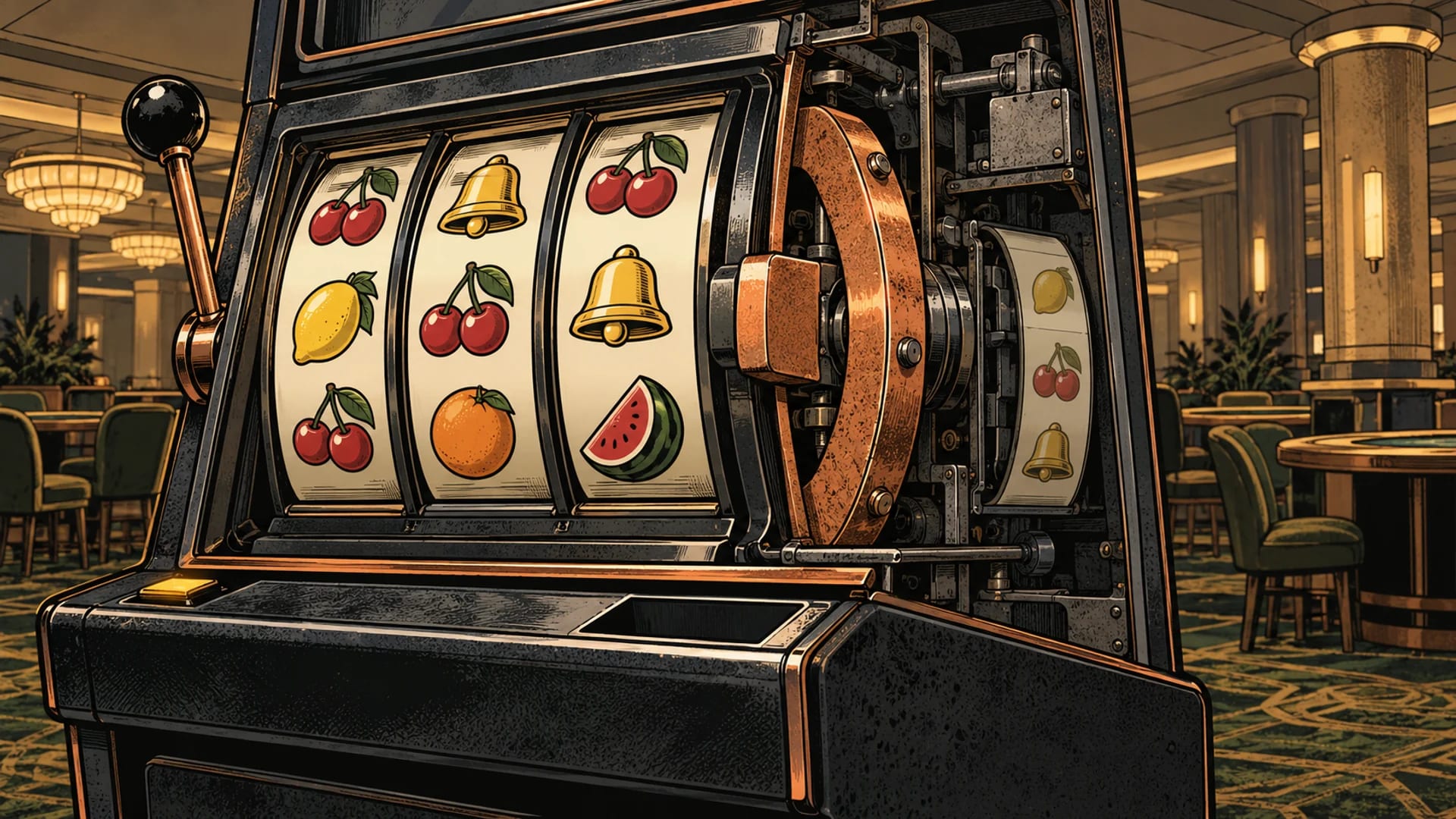
A retrigger adds spins to an existing feature. Follow a named seven-plus-four example, the remaining-spin counter and a separate rule that can end the round early.
A frozen feature can leave the screen behind the recorded round. Book of Dead's published help and Britain's interruption standard explain what needs reconciling.
A slot’s payout ceiling can end a feature with spins still left. Read the stake unit, clipping rule and missing probability separately.
A paid slot feature can still call its rounds free spins. Read the purchase price, mode-specific RTP and market boundary before treating a payout as profit.
The same theoretical return can come from frequent small payouts or rare large ones. Worked models separate payout spread, hit frequency and a maximum prize.
Casino RTP is a long-run theoretical average, not a session promise. See how it differs from volatility, hit frequency and live performance monitoring.
Read a real casino RNG certificate: what the laboratory tested, how software versions matter, and why randomness alone does not verify every payout.
A familiar game title can hide a different certified build, RTP, feature set or interface. The rules screen matters more than the thumbnail.
Casino wager rules, hand comparisons, pots and room fees.

A changed bet can release a premature raise in a multi-way hand. A heads-up player who checks early faces a different restriction under the current TDA rules.
A loose face-down hand and an irretrievable muck have different consequences. A river example shows when an all-in requires everyone still involved to open their cards.
Follow 100/200 blinds through a two-player hand, then a separate tournament transition. The button stays with the same player while the opening action changes.
A player can add 190 to a 150-chip pot and reach a total bet of 200. The call and the money already committed explain the difference.
One seat supplies the table ante as well as its live blind. A dated 2026 structure explains which payment comes first when the stack cannot cover both.
One board can produce a winning receipt that is smaller than the stake. Follow two runouts through separate main and side pots, consent and odd chips.
A $5 big blind can still owe another $5 before the flop. Follow one optional $10 straddle through seven seats, four continuing hands and a $45 pot.
Track 200, 500 and 650 through one fictional hand, then see how cumulative all-ins can reopen action for some players while leaving others unable to raise.
A tied hand does not always mean equal piles of chips. Denominations, position and the game’s own rules decide where the remainder goes.
A champion can hold every chip and receive only half the prize pool. Separate cash denominations, entry charges and a tournament’s payout schedule.
A vacant poker seat can affect position, unpaid blinds or tournament balancing. Named online and live rules explain why those situations need different records.
An entry price is not always the full tournament bill. Separate new attempts from extra chips, then count the fees and prize-pool contributions.
Same poker hand, different credit column. Read denomination, the five-credit royal-flush step and the jackpot version before interpreting an award.
A pair can win its side bet while losing against the dealer. Follow separate wager lines, queen-high qualification and a paytable that belongs to a named version.
A shared pair does not guarantee a tie. Four fictional hands show where kickers count, when one hole card is enough and when everyone plays the board.
A £40 call into £160 offers 4:1 pot odds. The percentage uses a different denominator. A worked ledger separates that price from equity, fees and future bets.
Three unequal stacks can produce different winners. Follow a 50/120/200-chip example through the main pot, side pot, a fold and an uncalled return.
Follow the money removed from a poker pot, the ceiling on a hand's fee and the entry payment that never reaches a tournament prize pool.
Follow split hands, double-down stakes, insurance and surrender under the rules of the named game.

Two equal wagers can return different amounts against the same dealer 22. An original blackjack, a switched 21 and an already-busted hand need separate settlements.
A pair payment and a losing hand can coexist. One named public ruleset shows why separate stakes and a round's total need different readings.
A late dealer blackjack can meet money added for a double or split. One named rulebook shows why card timing and original-only collection need separate checks.
An ace can turn nine into soft 20, then fall to one when another card arrives. Follow the arithmetic without confusing the score with an allowed action or payout.
The same total can stop the deal or require another card. Trace the ace's value and the instruction that governs the dealer's next move.
A winning natural earns less at 6:5. Follow the profit and returned stake, then check which hands qualify before treating a total of 21 as a premium win.
A double adds a wager and limits the next draw. Compare ordinary settlement with named Spanish 21 rescue and Free Bet rules, without confusing returned stakes with profit.
Splitting adds an equal wager. Follow the new hands, restrictions on split aces, resplitting limits and the difference between 21 and a blackjack payout.
A winning insurance payment can offset a lost main bet without refunding it. Follow the separate stakes, the dealer check and the £10-plus-£5 arithmetic.
A surrender decision can precede the dealer's blackjack check. Follow the decision window and the rule that determines whether a £20 stake returns £10 or nothing.
Follow commission, returned stakes and the exceptions that change a Banker payout.
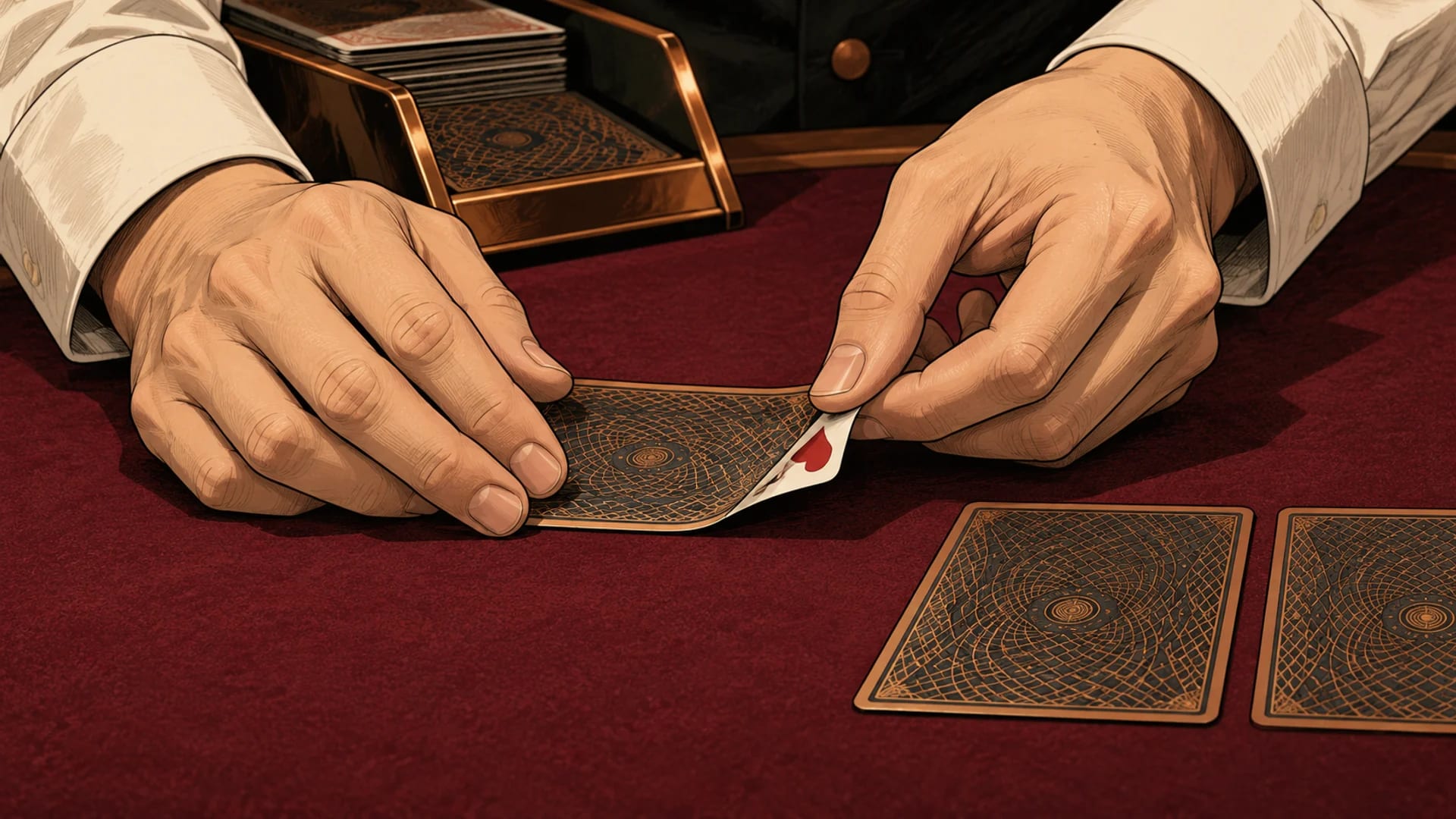
A dealer can bend a card; a player can peel an on-screen mask. Neither action replaces the drawing chart. Read two named Evolution formats and a worked hand.
Player and Banker can push while a Bonus wager loses. The separate Tie bet has its own payment, and the returned stake is not profit.
A 5% deduction, a half payout on six and a push on three-card seven produce different returns. Follow the main Banker stake through three named baccarat rules.
What a demo can show and where its evidence stops.

A demo can teach game controls without forecasting cash results. Read Britain's same-site rule, supplier showcase exception and limits of practice credits.
How the round reaches your screen, and where the rules meet the interface.

See how cameras, game-control equipment, low-latency streaming and operator wallets turn a live dealer table into a synchronized online casino round.
A frozen stream does not automatically void a live casino wager. Acceptance, remaining player decisions and round validity determine what happens next.
The crash loop is easy to see and hard to time. The exact RTP, cash-out rule and fairness proof belong to the verified rules of each implementation.