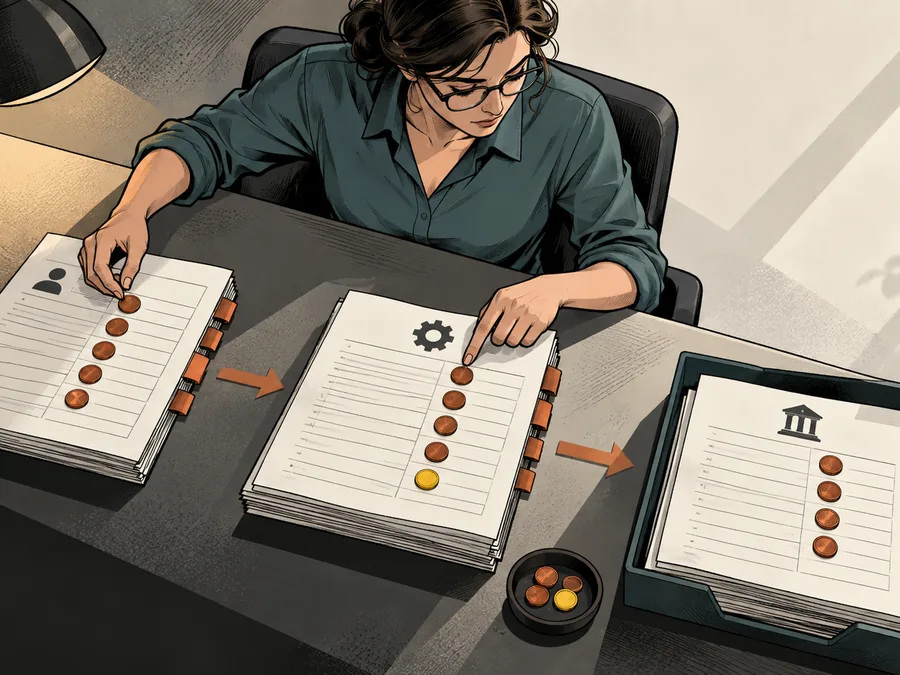

Put £100 into a gambling account with a £100 weekly limit, withdraw £40, then try to deposit again before the week ends. A *gross* deposit limit leaves no room for another deposit: it counts the £100 paid in, not the £60 left after a withdrawal. A *net* limit could leave £40 of room. The figures are an illustration, not a report of any customer's account. They explain why a small label in a casino cashier or sportsbook app matters. Gambling Commission's revised RTS 12 text
From 30 September 2026, the Gambling Commission requires licensees covered by its Remote Gambling and Software Technical Standards to offer a gross limit, call that limit a “deposit limit” and give it at least equal prominence if other financial limits are offered. A net deposit limit can remain an additional choice; it cannot replace the gross one. The change applies across the regulator's stated scope of gambling, except subscription lotteries. It is not a rule that every customer must set the same amount—or set a limit at all. Commission's implementation notice · RTS 12 annex
The number that does not refill after a withdrawal
Gross and net limits answer different questions. A gross deposit limit caps money entering the account during its defined period. In the £100 illustration, the first £100 deposit uses the whole allowance. Moving £40 back to a bank does not erase the earlier incoming transaction. A net deposit limit subtracts withdrawals from deposits in the same period; on those simplified facts it could allow £40 more in. Neither calculation says how much was staked or lost. RTS 12B definitions
That is the regulatory point, not a claim that withdrawals are bad. Some respondents to the Commission argued that a gross limit might discourage withdrawals when customers know they cannot redeposit immediately; others argued that net limits can let a customer pay in more than the headline amount they thought they had set. The regulator recorded both objections. It chose a common gross option while allowing additional net, stake and loss limits rather than declaring one model suitable for every person. Consultation response on the choice of limit
This also separates the limit from the payment rail. A card or open-banking transfer can be technically successful while the gambling account refuses a further deposit because its own limit has been reached. Our deposit-reversal investigation follows the opposite failure—an apparently approved payment later unwinding. The cashier needs to make clear which event occurred instead of showing the same generic “payment failed” message for both.
The word “deposit” now carries a rule
The regulator's wording is unusually specific about naming. The mandatory gross option must be described to a customer as a deposit limit. A generic “deposit limit” cannot quietly mean an allowance replenished by withdrawals. The Commission still permits an explicitly distinguished *net deposit limit* in its implementation guidance. That apparent linguistic tension is resolved by the modifier: the customer should be able to see that the net calculation is a different, additional control, not the required gross one. Commission's decision on terminology · RTS annex
This is a product-design obligation as much as a glossary change. If a platform presents several controls, gross deposit limits must have at least equal prominence. It cannot bury the required version behind an attractive alternative. The Commission originally proposed making gross the default but changed to “as a minimum” after consultation, saying the evidence did not support making it the default at that time. Equal prominence preserves a genuine choice without making the required option hard to find. Decision on minimum versus default
The wider RTS already requires a direct route to financial-limit settings from home and deposit screens, a free-text setting field and an account-level limit as a minimum. Those are part of the earlier phase, effective in October 2025; the gross-definition change is the September 2026 phase. Treating the whole screen as a brand-new September rule would obscure what the operator should already have built. Commission's account of the staged rollout · RTS 12A–C
A fixed period, not a sliding escape hatch
The revised gross limit must be available for 24 hours, seven days and one month. If a customer sets more than one time frame, the tightest applicable limit governs. The Commission's own example pairs £10 daily with £100 weekly: seven £10 days would allow only £70, not £100, that week. A cashier cannot let the larger weekly number override the daily ceiling. RTS 12B time-frame rule
Only the required gross deposit limits must be offered on fixed time frames. Other controls, including an optional net deposit limit, can use fixed or rolling periods. “Fixed” does not necessarily mean midnight for every customer: the Commission says the reset can be shared across accounts or tied to the time a customer originally set the limit, provided the reset is explained clearly. Its May 2026 clarification corrected an older impression that the same fixed-period restriction applied to every financial limit. Commission's fixed-versus-rolling clarification · extension notice
When the gross limit is reached, the system must stop further deposits until the period restarts or the customer requests an increase that passes the existing cooling-off rule. That rule requires at least 24 hours and a fresh positive confirmation at the end of the wait; reducing a customer-led limit normally takes effect immediately unless a technical failure prevents it. An “increase limit” button is therefore not an instant top-up route. RTS 12B and 12D
What the cashier has to explain
Imagine a combined casino and sportsbook account. The customer deposits into one wallet, plays a slot and places a football bet. The gross deposit counter tracks money entering the account, not the individual game or market. The standard says limits apply at account level as a minimum; product-specific controls can be added, but the operator must say clearly whether a limit covers only a game, a channel or the whole account. That distinction also matters when the casino and sportsbook share one login but show different front ends. RTS 12B account-level guidance
The front end should reveal three facts before a deposit attempt: which limit is active, how much allowance remains, and when the relevant period resets. The first is a regulatory naming problem; the second and third are practical interpretations of the published requirements, not a prescribed three-field interface. An operator also needs a ledger that distinguishes a deposit from a withdrawal, failed payment, returned stake or bonus credit. Our payment-reconciliation guide explains why a bank entry and a gambling account entry are not interchangeable records. An allowance calculated from the wrong one could give the customer a misleading number.
Our online-slot stake-limit report covers another British ceiling that lives inside a game cycle. It must not be confused with this account-level deposit limit. A slot's permitted stake, a customer's chosen stake limit and the amount that may enter the wallet are separate controls; meeting one does not satisfy the others.
What is still not established
The Commission postponed the gross-limit phase from 30 June to 30 September 2026 after operators asked for more technical development time. Its May notice warns that an older annex contained errors and says copies obtained before 22 May should be disregarded. This article uses the reissued annex, not the withdrawn text. The date is an implementation deadline; it is not evidence that every operator's live cashier has already changed on 25 September. Implementation extension · reissued RTS annex
Nor has the regulator shown, in these documents, how much the new definition will change gambling harm, withdrawal behaviour or limit adoption. Those are outcomes to measure after implementation, not benefits to declare in advance. For now the verifiable change is narrower and more useful: every covered customer must be offered a gross deposit limit they can identify, alongside any clearly differentiated optional controls. For the cashier, the decisive test is whether the label, calculation and reset time all tell the same story.