You can lose a £10 blackjack bet, receive £15 from the dealer and finish exactly where you started. In this insurance example, £15 went onto the table in the first place.
Blackjack insurance is an extra wager on the dealer having blackjack, not a refund attached to your original bet. Its result and the result of your hand need separate entries. A winning insurance payment can offset a losing main stake without making either transaction disappear.
The rules below come from the Massachusetts Gaming Commission's Blackjack rulebook, checked on 14 October 2026. They describe that jurisdiction's permitted procedures, not every online game carrying the blackjack name. The pounds are hypothetical teaching amounts, not Massachusetts table limits or currency.
The extra stake has its own condition
Section 9 offers insurance when the dealer's first card is an ace. It wins if the second card is a ten, jack, queen or king, giving the dealer blackjack. Another ace or a card from two to nine loses the insurance wager. The player's own total does not determine that side bet.
The usual ceiling in this rulebook is half the initial main stake. There is a narrow chip-denomination exception allowing the next available chip unit when an exact half cannot be wagered. Winning insurance pays 2:1. That means two units of profit for each unit staked, with the winning stake also returned.
Insurance is therefore additional money committed to a defined event. It is not a fee that cancels any loss your hand might suffer later.
£15 returned is not £15 profit
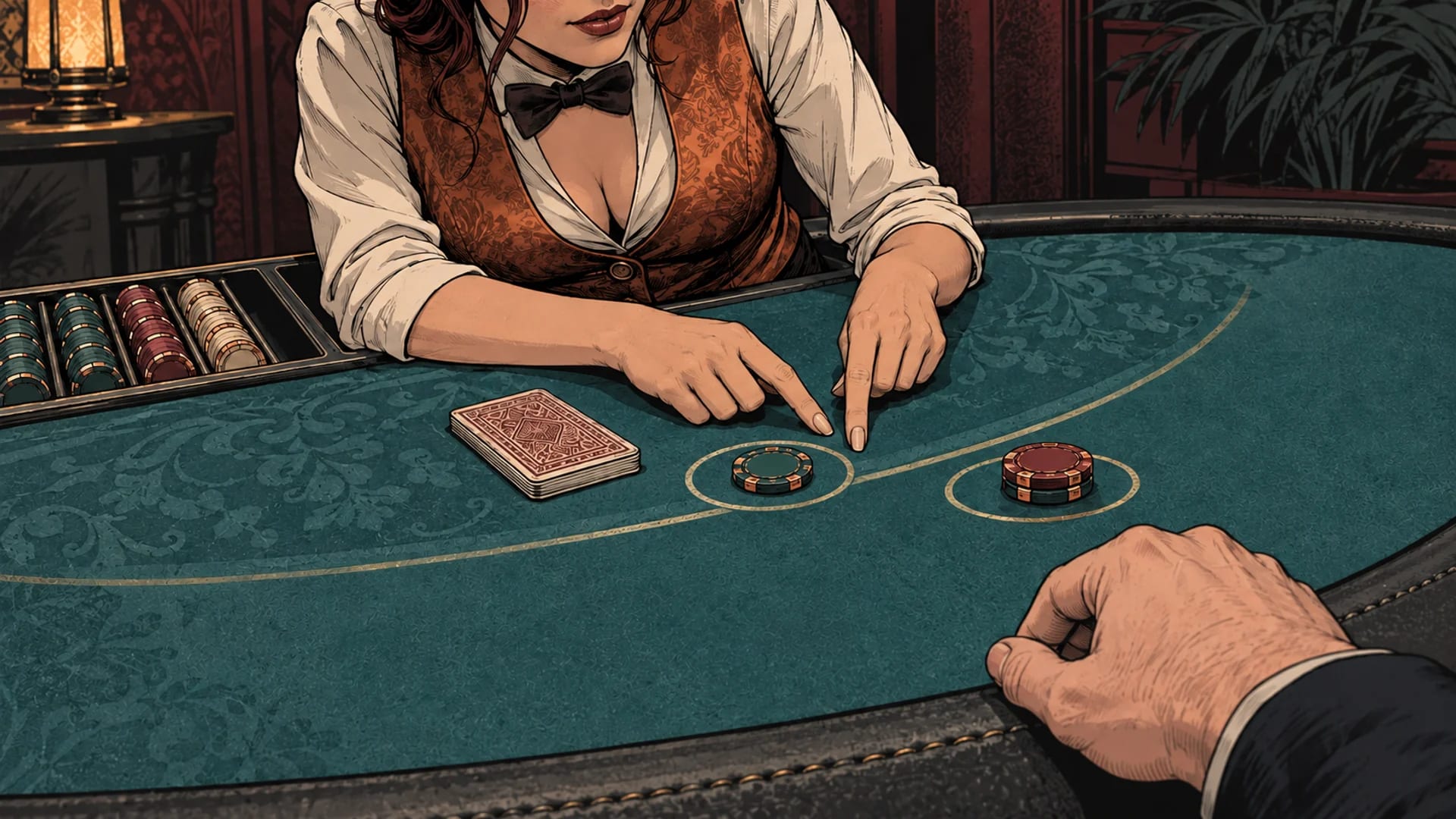
Take a £10 main wager and a separate £5 insurance wager. Assume the player does not have a natural blackjack, and exclude splitting, doubling and other side bets. Here, a natural means an ace plus a ten-value card in the initial two-card hand.
If the dealer has blackjack, the main £10 loses. The £5 insurance earns £10 profit, and its £5 stake comes back. Together, those settlements return £15 against the £15 originally staked: a combined net result of £0, not a £15 gain.
| Dealer's first two cards | Main £10 wager | Separate £5 insurance |
|---|---|---|
| Ace plus a ten-value card | Loses £10 in this non-natural-player example | £10 profit plus £5 stake returned |
| Ace plus another ace or a card from two to nine | Settled under the main-hand rules; insurance does not decide it | Loses £5 |
If the dealer does not have blackjack, the insurance loss stays £5 whether the main hand eventually wins, loses or ties. It does not get added back merely because the player later wins the hand.
Our roulette payout explainer deals with the same distinction between quoted profit odds and the full amount returned. Neither calculation tells you which outcome will occur.
Check when the dealer checks
Massachusetts permits different dealing sequences. Under section 6(i), a table using the permitted card-reader procedure checks a potential dealer blackjack before additional cards go to players. Section 9 requires insurance stakes to be placed before the hole card enters that reader.
Without a reader, section 9 sets a different placement window: after players receive their second cards and before further player cards, with a notified operator option concerning the individual player's turn. Do not assume a video showing an early check describes a table that deals the dealer's second card later.
Even within this rulebook, insurance is unavailable under section 6(j)'s alternative procedure in which both dealer cards are exposed before players receive additional cards. An online table needs its own version check. Open the help panel for the game actually loaded, rather than borrowing a rule from a similar-looking lobby tile. Our report on casino-game versions follows those differences.
A player's blackjack changes the example
If the player also has a natural, the main bet cannot be treated as the losing £10 in the table above. Section 7(b) makes simultaneous player and dealer blackjack a standoff. Section 7(c) also permits an even-money option against a dealer ace, but section 7(d) excludes that option when the table pays blackjack at 6:5. Even money and a separate insurance settlement should not be casually substituted for one another across payout variants.
Before interpreting a table's insurance offer, find four things in its rules: the qualifying dealer card, the separate stake limit, the point at which the dealer checks, and whether the displayed payment includes the returned stake. If the player has blackjack, read the natural-hand and even-money clauses too.
Those checks explain the settlement. They do not establish that buying insurance is a winning strategy, or that the word “insurance” protects the rest of a gambling balance.