Two sevens can qualify for a side-bet payment while their blackjack total of fourteen loses against twenty. The cards have not changed. The two wagers ask different questions about them.
Separate settlement does not mean the results are statistically independent: both can depend on the same cards. Nor does a side-bet win establish a profit across the round. The amount committed to the main hand still belongs in the calculation.
The first two cards can finish one wager early
Grosvenor's public rules for Blackjack: Perfect Pairs and 21+3, read on 28 October 2026, describe a six-deck game. A corresponding main wager is required before a side bet can be placed. Its Perfect Pairs wager tests the player's initial two cards; the side bets settle after the deal, before the main game continues.
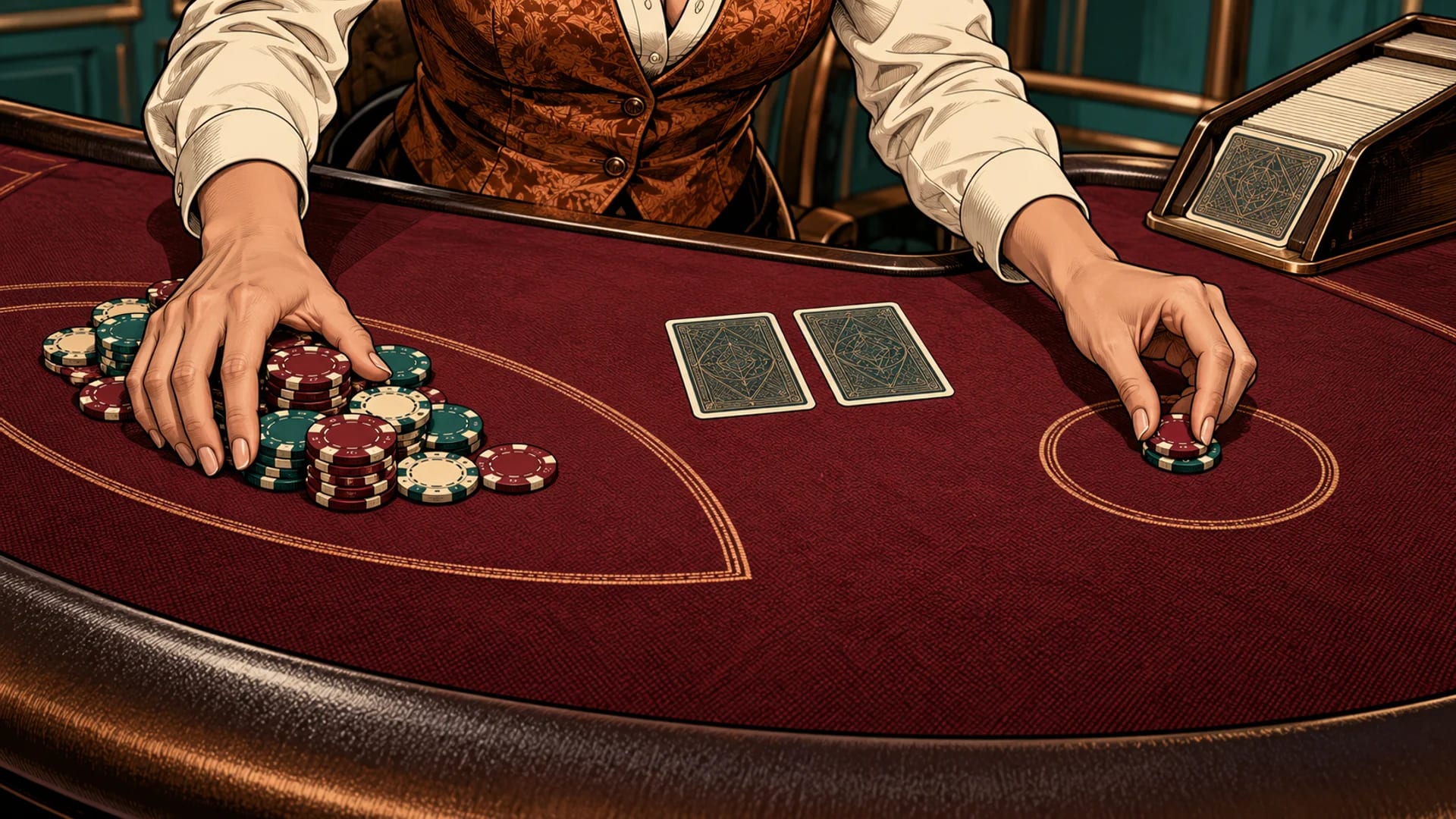
The published pair schedule is 5:1 for a Mixed Pair, 10:1 for a Coloured Pair and 30:1 for a Perfect Pair. Its example of a Coloured Pair is a seven of clubs with a seven of spades: equal rank and colour, different suits.
These are the terms of that named public listing, which still contains legacy Flash wording. We have not verified a current account's loaded game or betting limits. A different table's identically named wager may have another schedule. Our game-version report explains why a familiar title is insufficient.
A later hit cannot supply a missing opening pair under this test. Equally, continuing the main hand does not turn an already qualifying pair into a non-pair. The initial-card condition identifies what is being settled.
A winning £1 side bet can accompany a £10 overall loss
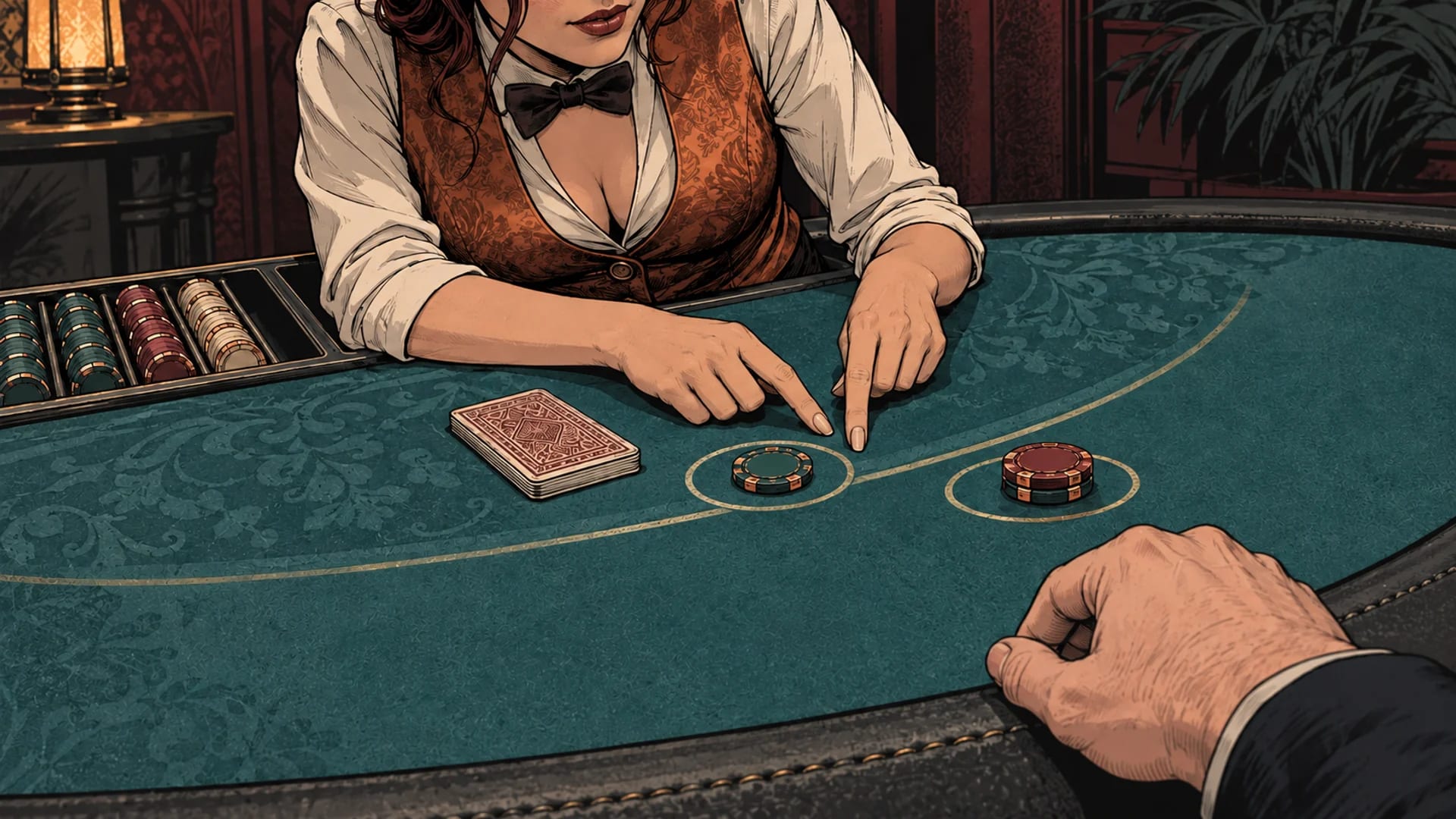
Use an invented settlement with £20 on the main hand and £1 on the Coloured Pair. The opening cards are the two sevens above. Suppose the player takes no further cards and the dealer finishes with twenty. There is no split, double, insurance or additional wager. This is a calculation exercise, not a recommended way to play fourteen.
The pair earns £10 profit at the cited 10:1 rate. Including the returned £1 side stake, its credit is £11. The main £20 loses. Against £21 committed altogether, £11 comes back: the combined result is a £10 loss. A message celebrating the pair would describe one wager correctly while saying nothing about that combined result.
Keeping the main stake at £10 instead changes the accounting. The same £1 pair wager would still return £11, now against £11 staked overall. That alternative finishes level. Neither example changes the pair's payout rate or predicts how often it occurs; only the assumed main stake differs. These amounts are not quoted table limits.
The reverse can also happen. In a separate invented round, an unpaired eighteen beats a dealer's seventeen without extra purchases. At the listing's ordinary 1:1 main-hand rate, a £10 wager returns £20 including stake, while a £1 losing pair wager returns nothing. Total stakes of £11 against a £20 return produce £9 profit. The side bet did not need to win for the main hand to be paid.
A single aggregate credit can conceal these different settlements. Retain each stake and its result before interpreting the round total. Our round-history article explains how to connect a disputed credit with an identifiable event.
The condition matters more than the nearby betting circle
Perfect Pairs concerns the opening pair. The same Grosvenor rules describe 21+3 using the player's first two cards and the dealer's upcard. A payout schedule for one should not be copied onto the other. Our insurance article covers a further, different condition; it is not the pair wager used here.
In Great Britain, RTS 3 requires accessible rules and potential-payout information before commitment. RTS 2 requires clarity about amounts and the gamble's content. Those British requirements do not supply one international side-bet paytable.
For the hypothetical £20 hand and £1 pair, the two settlement lines are therefore perfectly compatible: main hand lost, pair won. The account has still lost £10 across the example. Describing the side bet as a winner neither refunds the main wager nor makes the whole round a winning one.