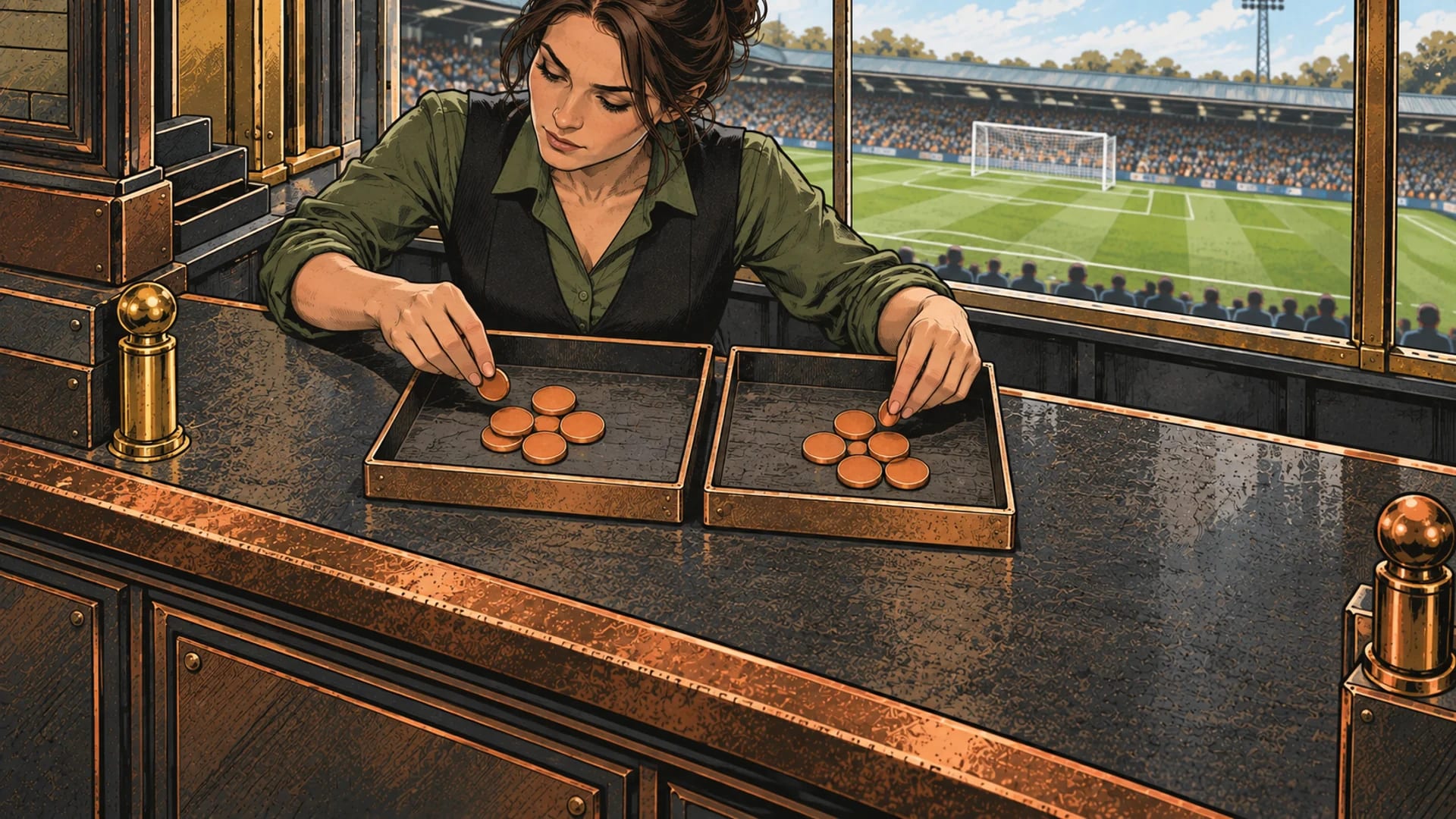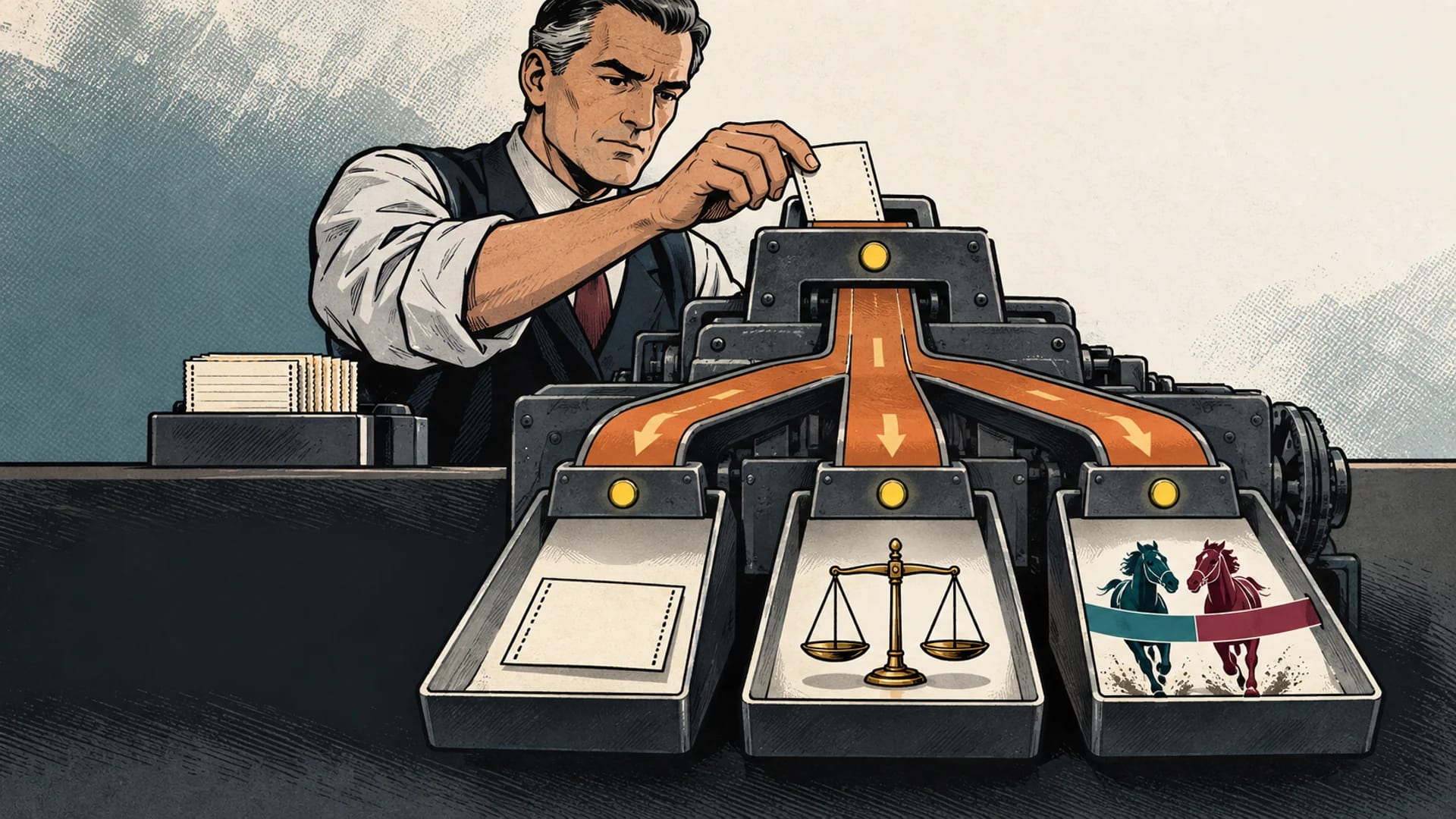

The draw has not disappeared from the match. It has a different settlement attached to it. That distinction explains why a team can fail to win without the ticket becoming a losing single, and why an accumulator containing that team can still lose elsewhere.
This explainer concerns ordinary cash bets on completed football matches. It uses named English-language help editions checked on 18 October 2026, not a promise that every operator, country or specially priced product applies identical terms.
A refund has no winnings attached
Sky Bet's football match rules describe Draw No Bet as a match-result market in which a draw returns stakes. The receipt may shorten the name to DNB. A win by the selected team earns the accepted win return; a defeat loses the stake.
Take a fictional £12 cash single at decimal odds of 1.75. These are teaching numbers, not a live price or an invitation to bet. Assume the covered match has completed and no separate deduction applies.
| Selected team's result | Total returned on the £12 single | Profit or loss |
|---|---|---|
| Win | £21 | £9 profit |
| Draw | £12 | £0 |
| Loss | £0 | £12 loss |
The winning payment is £12 × 1.75 = £21, including the original £12. On a draw, the account receives only the £12 that was committed. A history screen putting both amounts in a "returns" column does not make both outcomes profitable.
Double Chance is different. A selection covering the team or a draw wins on either of those outcomes. The Double Chance section of bet365's Great Britain football rules explicitly lists home-or-draw and draw-or-away as winning combinations. DNB refunds the drawn single instead. Prices cannot be treated as interchangeable just because both markets mention a draw.
A void leg does not necessarily release the stake
An accumulator combines selections into one wager. Its stake is not a set of separate single stakes, each waiting to be refunded independently.
Betfair's Void Bets guide says a multiple with one void leg is adjusted rather than cancelled: a treble becomes a double, or a double becomes a single, at reduced odds. The guide separately explains that a void single returns its stake.
Apply that ordinary void-leg treatment to a hypothetical £12 double containing a DNB selection at 1.75 and an independent selection at 2.00. If the DNB leg draws and is graded void under the applicable product rules, its price contributes 1.00 rather than 1.75. The remaining selection then decides the wager.
If that remaining selection wins, the return is £12 × 1.00 × 2.00 = £24, including the £12 stake. If it loses, the return is zero. There is no separate £12 refund from the drawn leg on top of either settlement.
Had both legs won, the same illustrative prices would have returned £42. Removing a leg therefore removes its contribution to the quoted return; it does not preserve the original £42 payout or protect the other selection from losing.
This calculation assumes a conventional accumulator with a void DNB leg. It does not establish the rule for a same-match builder or another specially priced combination. Our guide to voids, pushes and dead heats explains why those product boundaries matter.
The match can continue after this market has finished
For the normal match markets described in its British help edition, bet365 uses scheduled 90 minutes plus stoppage time unless otherwise stated. Extra time and a penalty shoot-out fall outside that default. The page also identifies exceptions for friendlies and shorter or non-standard competitions, so "90 minutes" should not be imposed on every fixture.
Imagine a standard knockout match tied 1-1 after normal time, with the selected team later advancing on penalties. A DNB single covering normal time returns its stake. A separate selection on that team to qualify asks who progresses and may have a different result. The later shoot-out does not turn the earlier refund into a DNB win. Our extra-time settlement explainer follows those different finishing points.
A pre-match Asian handicap of zero also leaves the scores unadjusted, so a tie produces a push in the settlement described in our Asian handicap guide. That is a comparison of result states, not proof of matching prices or identical in-play terms.
For a disputed DNB return, preserve the market's covered period and whether it was a single or a leg of a multiple. The useful question is where the original stake went after the draw: back to the balance, or still into the remaining wager.