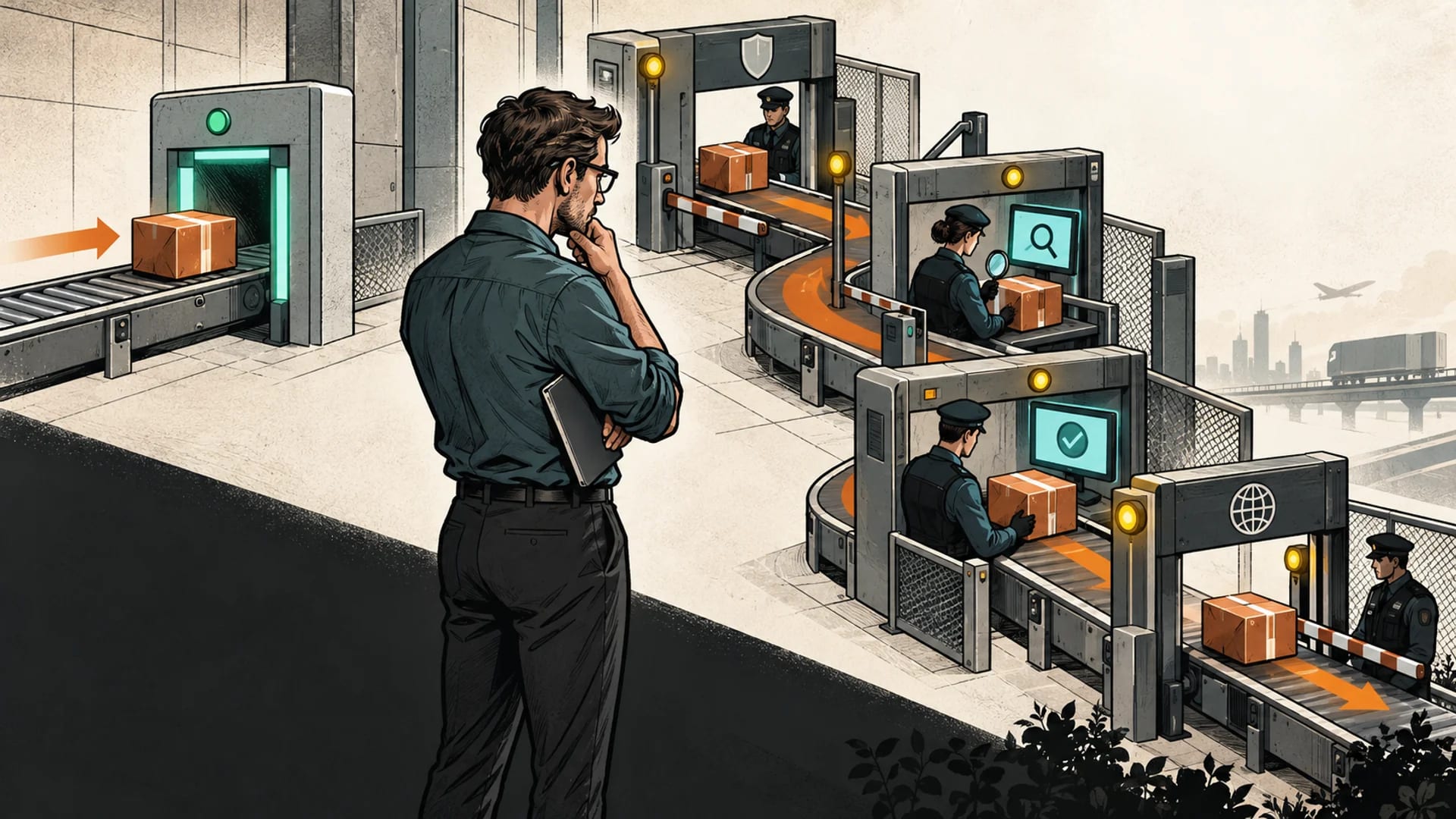

The gambling account is closed to play. The money in it should not be closed to its owner. Under Great Britain's remote-gambling rules, a licensed operator must close an account when the customer enters a self-exclusion agreement and return the funds it holds there. GAMSTOP makes the cross-operator block possible; it does not send the balance back. If the money has not arrived, the operator holding the account is the place to ask what remains payable and how it will be returned. Gambling Commission, remote self-exclusion code · GAMSTOP, account balances
That sounds like an administrative detail until the cashier button disappears with the rest of the gambling interface. The block is supposed to stop another bet, not turn an ordinary account balance into a hostage. This article concerns gambling businesses licensed in Great Britain and funds already in an online account. It does not promise an instant payout, settle a disputed win or describe the law of every offshore website.
One switch, two different jobs
GAMSTOP is a national online self-exclusion scheme. A customer registers once; participating gambling companies check the details when someone tries to register or log in, and also check existing customers daily. The Gambling Commission requires remote licensees within the scope of its multi-operator code to participate. The scheme's job is to tell operators that a matching customer must be prevented from gambling. It is not a shared wallet, payments processor or complaints tribunal. GAMSTOP, how the scheme works · Gambling Commission, multi-operator code
The second job belongs to each company that holds an account. The regulator's remote self-exclusion code says that a licensee must close the customer's accounts and return any funds held in them. Its public explanation says the same thing in plain language. GAMSTOP's own answer about missing balances narrows the practical route: contact the operator of each account directly, because the method of return depends on that business. There is no single request to GAMSTOP that withdraws balances from every brand. Gambling Commission, remote self-exclusion code · Gambling Commission, public self-exclusion guide · GAMSTOP, missing balances
This division matters to both sides. A player may have money in a sportsbook, a casino and a bingo account. The exclusion can travel across the licensed online market, but each account has its own ledger, payment method and support team. An operator cannot point at the national scheme as though that scheme holds its customer's money; equally, the scheme cannot inspect or settle a particular account balance for the customer. The latter is an inference from the separate roles described in the regulator's code and GAMSTOP's guidance, not a claim about access to any particular company's internal systems.
A blocked login is not an instruction to gamble again
The uncomfortable design problem is obvious: how does someone recover money from a site they should no longer use? GAMSTOP says a person may be blocked from logging in or creating a new gambling account once registered. Its terms also tell people not to try to access online gambling accounts during their exclusion. The useful route for a balance query is therefore customer support, not an attempt to bypass the block, create another account or place a wager to unlock the cashier. GAMSTOP, login checks · GAMSTOP, terms of use
When contacting an operator, identify the brand and account using the details it already has, ask for the withdrawable balance and the proposed return method, and request a written explanation if the amount or timing is disputed. Keep the exclusion confirmation, earlier balance or transaction records if available, and the correspondence. None of this requires the customer to make another deposit or reopen play. These are practical questions to help the operator identify and resolve an account, not a prescribed regulatory form or a guarantee that every item can be retrieved after access is blocked.
There is also a distinction between a balance shown before exclusion and money the operator says is payable after account review. A pending transaction, contested payout or legally required check can create a separate dispute about the amount or timing. Self-exclusion does not decide that dispute for either side. Our earlier guide to why gambling withdrawals take longer than deposits explains the payment and verification stages; this story is about the additional duty created when play is stopped.
Can the operator use verification to stall?
The Commission's withdrawal guidance rejects a familiar pattern: letting a customer deposit and gamble, then asking for information only when they try to get money out, if it could reasonably have been requested earlier. It also recognises that an operator may need information at the withdrawal stage because another legal obligation genuinely arises then. The difference is between a specific, explained requirement and an unexplained obstacle inserted after the business has accepted the money. Gambling Commission, expectations on withdrawals
That guidance is not a clock promising payment within a fixed number of days after GAMSTOP registration. It says that where there is no regulatory concern, no suspected breach of terms and no other valid reason, payout should not be delayed. It also says a company should normally explain what information it needs and why; the regulator acknowledges that a live financial-crime investigation can limit what it may disclose. A customer who is told only “regulatory reasons” can ask what the operator can explain about the outstanding check, the amount in dispute and the next step without assuming every delay is unlawful. Gambling Commission, withdrawal checks and explanations
The regulator has also said that confiscating a customer's deposit is not an ordinary substitute for complying with anti-money-laundering or fraud-prevention duties. Those duties may justify a delay; they do not automatically transfer the deposit to the house. That is a different question from whether winnings are contested under fair, published terms. Treating every pound visible in a pre-exclusion screenshot as indisputably payable would obscure that distinction, but treating the account lock as permission to keep it would be worse. Gambling Commission, deposit confiscation and fair terms
The marketing block should travel with the gambling block
Money is not the only loose end. The remote self-exclusion code requires operators to take reasonable steps, as soon as practicable, to stop gambling marketing to an excluded customer. It also requires removal or a do-not-market flag in company or group marketing databases within two days of receiving the completed exclusion notification. That is a concrete operator duty, not a promise that every advert on the open internet will vanish. Gambling Commission, remote self-exclusion code
For a person still receiving direct promotional email or app messages from a company that knows about the exclusion, it is worth keeping the message and its date alongside the account correspondence. The issue is not just irritation: a blocked gambling login paired with an invitation to return shows why exclusion, payments and marketing controls have to work together. Our story on the boundary for gambling social posts covers a different question—advertising standards in public-facing content—rather than the operator's direct-marketing duty to a self-excluded customer.
GAMSTOP itself covers websites and apps run by businesses licensed in Great Britain. It is not the same as every land-based exclusion scheme. The regulator separately lists multi-operator arrangements for betting shops, casinos, bingo premises and arcades. An online block should not be described as a universal physical-premises ban. Nor should anyone assume an unlicensed offshore site will follow the British scheme. GAMSTOP, scheme coverage · Gambling Commission, premises schemes
If the balance does not come back
Start with the operator's complaints process and make the question testable: which account and balance are involved, when was exclusion activated, what amount does the operator accept is withdrawable, where will it send that amount, and what specifically remains unresolved? The Commission says it does not decide individual gambling-transaction complaints. Its public guide directs customers to complain to the gambling business first, including over payment handling or account closure. Gambling Commission, how to complain
If that process fails, the Commission says a customer can take an eligible dispute to the business's independent alternative dispute resolution (ADR) provider after eight weeks, or after receiving a deadlock letter at the conclusion of the complaint. ADR is free to the customer, but the provider decides whether a complaint is within scope; a general customer-service complaint or refusal to accept future bets is not necessarily adjudicated. Ask the operator which ADR provider it uses and keep its final response. Gambling Commission, ADR route and limits
This is also different from an operator going out of business. Our guide to player funds if a gambling operator fails examines what changes when the company itself cannot meet its obligations. In a routine self-exclusion case, the starting point is a live licensed operator that has closed play but still owes an accounting of the customer's money.
The clean principle is narrower than “GAMSTOP gives an instant refund,” and stronger than “the blocked login means the money is gone.” A national exclusion removes the opportunity to gamble across covered online operators. Each operator still has to account for the funds it holds, return what is due and explain any genuine obstacle. The player should not have to choose between keeping the exclusion intact and asking where their money went.