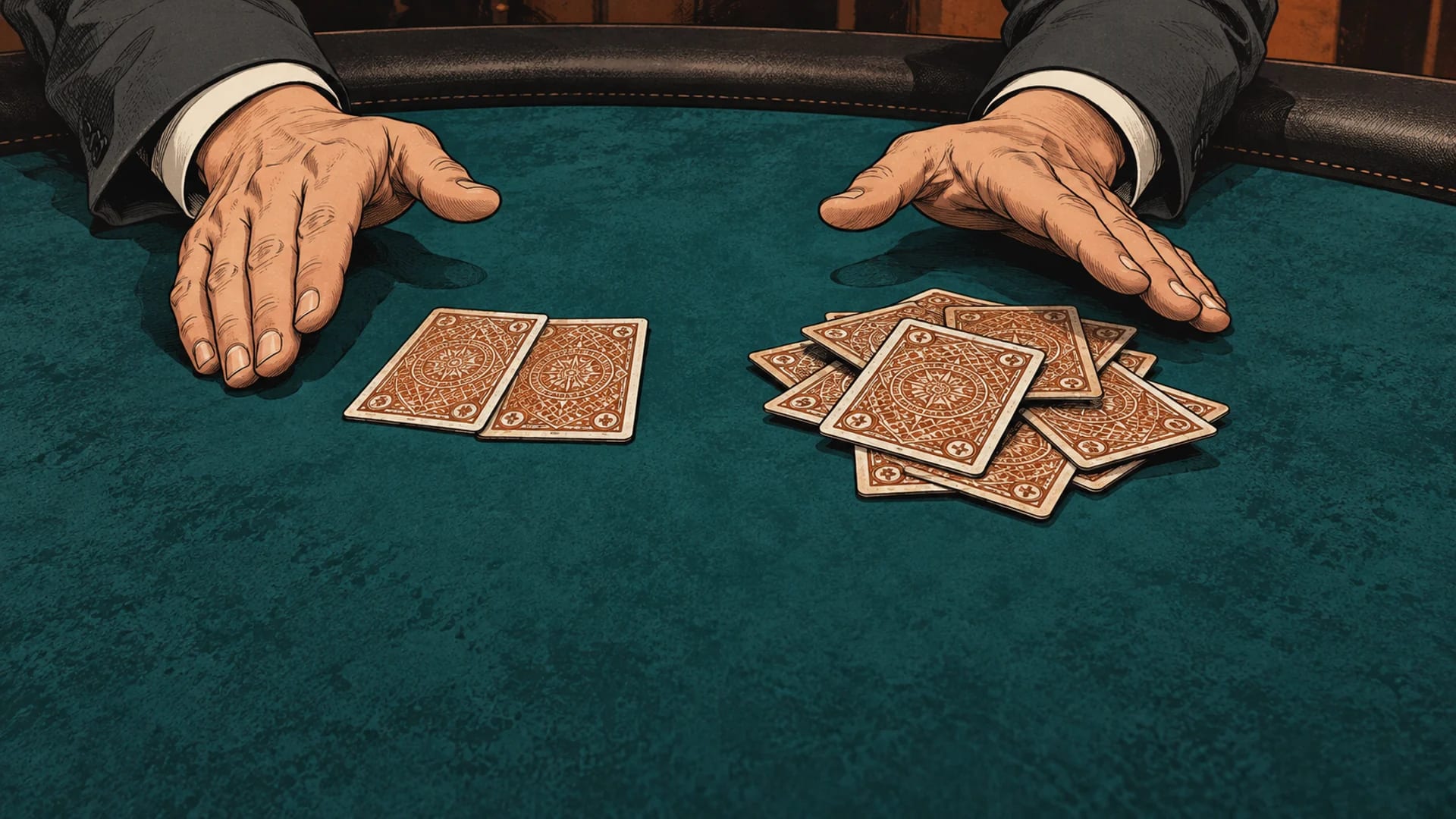
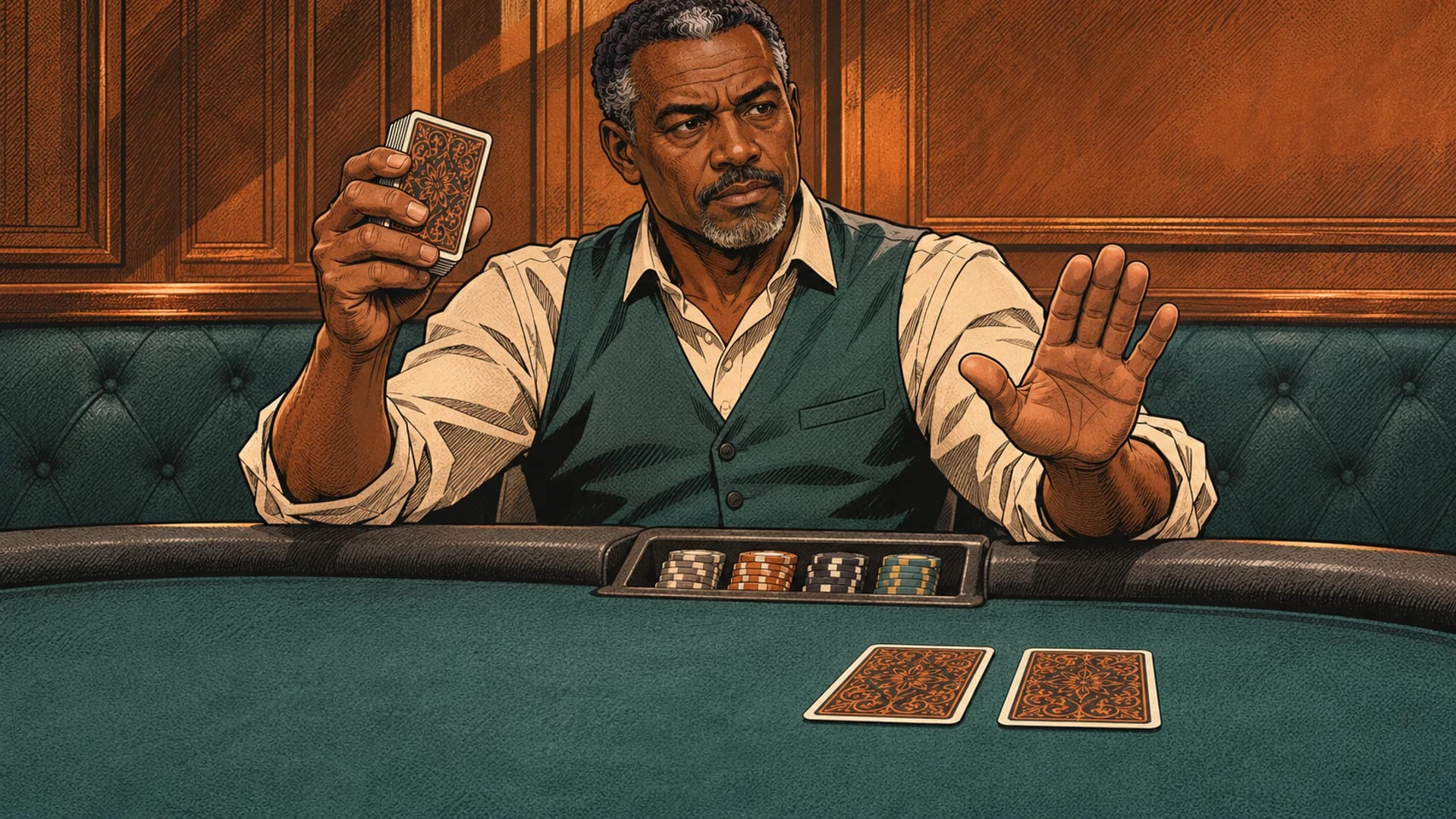
One of the dealer's first two cards lands face up. At a Hold'em tournament applying the Poker Tournament Directors Association's rules, that is a listed reason for a misdeal. But once enough players have acted, a dealing error can leave the table continuing the hand rather than starting again.
The TDA's 2026 rules, version 1.1 dated 21 September, separate a misdeal, a replacement card and a dead individual hand. This article follows that tournament framework, checked on 3 November 2026. The TDA supplements house rules; gaming-agency rules prevail if they conflict.
Which card was exposed?
Rule 37-A lists dealer exposure of either of the first two cards off the deck as a misdeal in flop games such as Hold'em. Those are the first two cards of the entire deal, not each player's two hole cards. Dealer exposure of two other downcards also meets the listed condition.
That wording does not supply a universal replacement-and-burn procedure for a single later exposure. The event's dealing procedure still matters. A player turning up cards during a hand is a separate issue: rule 70 allows a penalty for exposure with action pending, without automatically killing the hand.
Other listed misdeals include dealing the first card to the wrong seat, omitting an entitled seat and giving a player the wrong number of cards, subject to the button exception below. The list is not exhaustive. Under rule 1, the floor can give fairness priority over a technical rule in unusual circumstances; its decision is final.
If staff declare a misdeal, rule 37-C keeps the button and limits where they were. No new players join the redeal. A player originally dealt in but away from the seat may play the redeal; a player serving a penalty receives cards which are then killed. The original deal and redeal count as one penalty hand.
A fold and a call can close the route to a redeal
Consider one fictional eight-handed no-limit Hold'em tournament deal. Seats 1 and 2 post small and big blinds of 100 and 200; seat 8 has the button. Everyone is present, the deck is ordinary and nobody is all-in. The dealer accidentally gives the button only one hole card. Nobody notices before action begins.
| Point in this deal | Actions counted for substantial action | Has the threshold been reached? |
|---|---|---|
| Seats 1 and 2 post their blinds | None: posted blinds are excluded | No |
| Seat 3 folds in turn | One fold | No |
| Seat 4 calls 200 in turn | A fold and a call, with chips in the call | Yes |
| The button reports the missing card before acting | The earlier fold and call still count | Yes; a full redeal is unavailable under rule 37-D |
Play pauses before seat 5 acts. The button has not yet made a betting decision.
Rule 38 defines substantial action as two actions in turn with at least one putting chips into the pot, or any combination of three actions in turn. Two checks or two folds alone do not meet the first test. The fold followed by the call in this example does.
Under rule 37-D, a misdeal cannot be declared after that threshold, unless the deck is fouled. The missing card does not erase the action already taken.
The button has a specific replacement exception
Rule 39 allows missing button cards to be replaced even after substantial action if the game type permits it. It tells the player to announce the shortage immediately. In the fictional deal, the button has reported it without acting, so the floor can consider that exception rather than automatically killing the hand or redealing the table.
It is a conditional permission, not a replacement guarantee for every short hand. The same rule kills the button's hand if the button checks or bets with too few cards. Our action-out-of-turn article covers a different repair, where the betting order has been broken.
The longform rulebook's rule 40 illustrations separately show a non-button player with the wrong card count after substantial action. That hand dies; the remaining deal continues. All cards from the killed hand go into the muck, the discard pile. The dealer burns one card from the remaining deck before each subsequent street, without adding or skipping a burn to recreate an imagined original order.
A fouled deck remains the exception to continuing. Rule 37-E includes duplicate cards of the same rank and suit, or a card outside the game's standard deck. If discovered during play, the game stops and all bets return regardless of substantial action. Local regulations and house policy can define other fouled-deck conditions; rule 24 governs the deadline for a dispute after the hand ends.
In the fictional deal, staff need both the action history and the identity of the short seat. The button exception cannot be applied just because someone at the table is missing a card.
TDA rules used by permission of the Poker TDA, Copyright 2026, http://www.pokertda.com, All rights reserved.