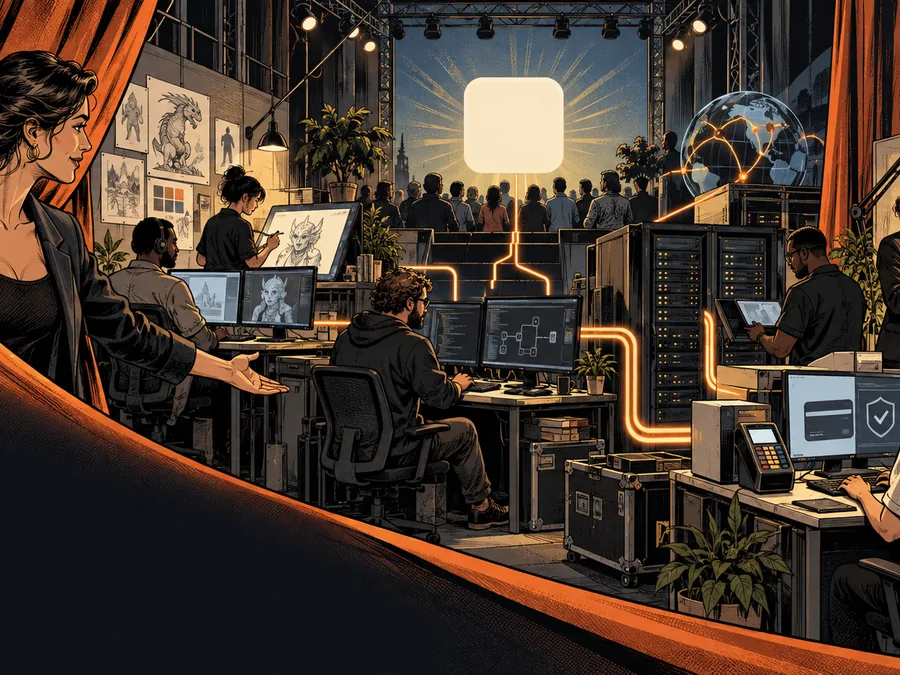
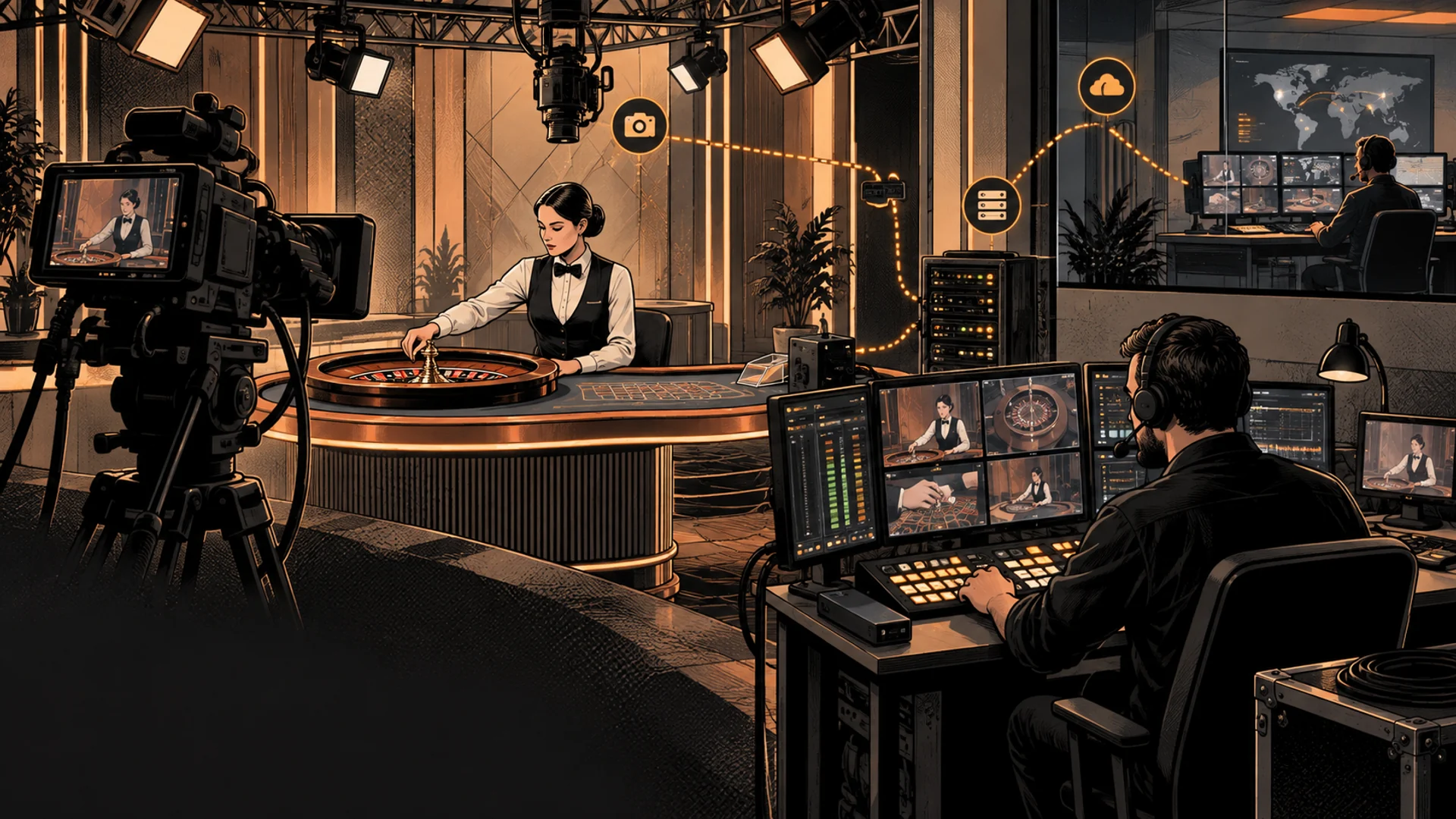
The useful way to understand the product is to follow one round from the player’s tap to the result.
One round, end to end
The player opens a table. The operator checks that the account and location are eligible, then loads a game client supplied directly or through an aggregator.
A betting window opens. The interface displays available actions, limits and a countdown. The studio and the digital client share the same round identifier.
The player submits a wager. The operator platform validates the balance and rules. A successful wager is recorded against that round before the window closes.
The physical game runs. A dealer spins a wheel, deals cards or presents another game sequence. Table equipment and game-control staff capture the outcome.
The system validates the result. Sensors, optical recognition, manual controls and supervision can contribute, depending on the game. The system must connect the observed result to the right digital round.
Accounts settle. The game engine applies the rules and sends win or loss messages. The operator wallet updates the player balance.
The audit trail remains. Round, wager and settlement records support disputes, monitoring and regulatory reporting.
Latency matters at every boundary. If the stream reaches the player late but the countdown closes on schedule, the interface can feel unfair even when the backend timestamp is correct. Good products communicate the cutoff and disable actions cleanly.
The studio is a production floor
A live casino studio contains more than tables and cameras. It needs lighting, audio, network redundancy, game-control stations, supervision, security and a schedule of trained dealers or presenters. Dedicated tables may carry one operator’s branding or language. Shared tables serve players from several brands.
SYNOT Interactive’s current product description lists professional dealers, high-definition streaming, multi-angle views, low latency, localized languages and both dedicated and shared environments. That is a supplier’s description of its own offer, but it identifies the main production choices an operator buys. SYNOT Interactive live casino
Evolution’s 2026 interim report illustrates the physical footprint behind a large B2B live product. The company reported opening a second studio in Michigan and referred to demand for native-speaking tables. A digital lobby can therefore depend on local facilities, staffing and market approvals. Evolution interim report, January to June 2026
Who is responsible for what?
| Layer | Core job | Failure visible to the player |
|---|---|---|
| Operator | Account, eligibility, limits, wallet, support and market offer | Rejected wager, wrong availability, stalled balance or support gap |
| Live game supplier | Studio, dealer, game control, stream and certified game logic | Stream interruption, unclear result or round mismatch |
| Platform or aggregator | Connects game sessions and messages between supplier and operator | Game fails to launch or settlement message is delayed |
| Payment provider | Deposits and withdrawals outside the live round | Funding or cash-out delay |
| Testing and regulatory bodies | Standards, approval and oversight in applicable markets | Product cannot lawfully launch or needs remediation |
Contracts allocate operational tasks, but an operator cannot explain a player problem merely by pointing at a vendor. The customer used the operator’s product and needs one coherent record of the session.
How the table becomes data
Different live games capture outcomes differently. Roulette tables can use sensors and visual recognition. Card games can combine physical cards with scanners or computer-assisted dealing equipment. A game controller watches the state and can intervene under documented procedures when the physical action or data capture is unclear.
The resulting data package needs the table, round, accepted wagers, outcome and settlement status. The video is evidence for the viewer, but the structured event record is what the wallet can process. If a camera angle changes, the result engine should not change with it.
Shared and dedicated tables
A shared table is the efficiency model. One production serves players arriving from multiple operator brands. The supplier can spread the cost of studio space and staffing while operators receive a broad schedule.
A dedicated table gives an operator more control over branding, language, presenter style and sometimes limits or features. It also requires enough demand to justify reserved production capacity. The choice is commercial as well as visual.
Localization goes beyond translating buttons. The operation may need native-speaking dealers, local game variants, market-specific limits and customer-support alignment. A table can be technically available while still being a poor product fit for an audience.
What happens when the stream fails?
The wager state and video state must be separated. A frozen picture does not prove that a round stopped. The backend may have accepted the wager and recorded a valid result. The game rules and incident procedure decide whether the round stands, is voided or requires review.
A clear interface should tell the player whether a wager was accepted, whether the round completed and how to retrieve its history. The worst failure state is ambiguity: an animation spins while the wallet already settled something the player could not see.
Studios therefore monitor more than uptime. They watch video delay, table equipment, dealer procedure, message delivery and synchronization. Operators need correlated identifiers so support teams can trace one complaint across their own ledger and the supplier’s record.
The business behind the table
The operator can pay for live casino through a revenue share, a service fee, dedicated capacity or a mixed contract. The supplier carries substantial production costs. Evolution describes its business as developing, producing, marketing and licensing B2B online casino solutions, a wider role than selling a video feed.
The gross revenue associated with a table is still not supplier profit or operator profit. Winnings are paid first; taxes, supplier shares, bonuses, payment costs, staffing and other expenses follow. Dedicated presentation can improve brand control but add fixed cost.
The questions to ask on a studio visit
An editor or operator evaluating a live product should ask:
How is a wager timestamp synchronized with the table countdown?
Which equipment captures the result and who can correct an error?
What identifiers join studio, platform and wallet records?
What happens to accepted bets during a video or network interruption?
Is the table shared or dedicated, and what capacity is guaranteed?
Which market approval and game version is being shown?
How are dealer training, security and incident review documented?
The dealer is the visible host. The product is the entire chain that makes the dealer’s physical action become a valid, reviewable account transaction.