
That is the short answer. A disconnection is a delivery failure, not automatically a cancelled game. The outcome depends on when the interruption happened, whether the wager was accepted, whether the player still had a choice to make and what the applicable rules say about an invalid or aborted round.
The screen and the round are two different states
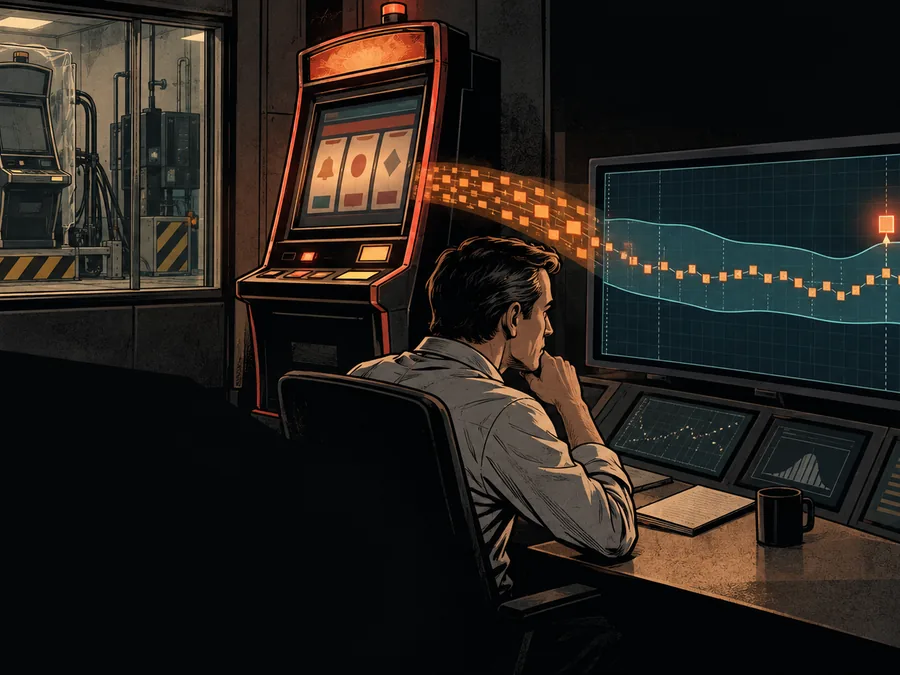
Live casino joins a video production to a transaction system. The camera shows the dealer and table; the game client records the betting window, submitted wager and any later player decision; the operator wallet records the financial result. Those layers are synchronized, but they are not the same thing.
A stalled picture can therefore coexist with a valid round on the server. The wheel may have stopped, the result may have been captured and the accepted wager may already be settled. The reverse is also possible: the video can appear healthy while a wager submission fails before acceptance.
Our guide to how live dealer casinos work follows that production chain. For a disconnection dispute, the important hand-off is narrower: what did the system record before the connection failed?
Four interruption scenarios
The same phrase — “the game disconnected” — can describe materially different events.
| What happened | Likely treatment under the cited rules | Record that matters |
|---|---|---|
| The player submitted a roulette or baccarat bet, it was accepted, and no further choice remained | The result can stand and the wager can settle from the completed round | Accepted wager, round result and account settlement |
| The client failed before the operator received the wager | There may be no accepted bet to settle; the balance and game history need checking | Submission and acceptance status, not the animation alone |
| A blackjack hand was active and the player still had to act | Recovery or a game-specific default action may apply; one public operator rule says the hand can be checked or folded depending on the other players’ actions | Restored hand state, decision window and game-specific rule |
| The table, game or provider declared a misdeal, malfunction or aborted round | The wager may be cancelled or voided under the applicable rules, rather than settled as an ordinary result | Incident decision, game logs and any refund entry |
These are not universal promises. They are a decision map built from the Great Britain technical standard and the public operator examples below. Another jurisdiction, operator or game version can use different procedures.
An accepted no-more-decisions bet can still settle
The UK Gambling Commission’s RTS 10 on interrupted gambling draws its first line after the operator has received notice of the gamble. When the player can no longer influence the outcome, its implementation guidance says the result should stand.
That describes a straightforward live roulette or baccarat case: the bet is accepted, the betting window closes and the player has no further action. Losing the stream does not alter the physical result or make the accepted transaction vanish.
Bet365’s current public game-disconnection guidance gives the same practical example. It says live baccarat or roulette wagers settle automatically according to the result when no further player decision is required, and directs the customer to game history.
“Accepted” is doing important work here. A chip graphic on screen is not enough to prove that the wager crossed the operator’s acceptance boundary. The transaction record has to show it. The Commission’s transaction-display standard requires clear information about the amount and content of a gamble before commitment, but the post-incident question is still what the system actually recorded.
A decision game creates a different problem
Blackjack is not roulette with cards. After the initial wager and deal, the player may need to hit, stand, split or double. A connection loss can remove the ability to make that choice while the hand and other participants continue.
RTS 10 calls games with multiple stages or decision points “stateful games”. Its guidance says operators should take all reasonable steps to restore such a game to its last known state so the customer can complete it. The standard also expects systems to retain information such as the state of a deck, dealt hands and accepted wagers where appropriate.
Product rules still decide what happens when full restoration is not possible. Bet365 says that a disconnected live blackjack or Casino Hold ’em hand will be checked or folded depending on the actions taken by other players. That is a specific operator rule, not a definition of how every live blackjack table must behave.
This is why “my internet dropped” is not a complete settlement argument. The unanswered questions are whether the hand was restored, how much decision time remained and which fallback action the rules assigned.
A game fault is not the same as a player disconnect
A home Wi-Fi failure, a frozen operator interface, a supplier message failure and a studio misdeal can all look like one broken round from the player’s side. Operationally, they are different incidents.
Bet365’s casino rules say live wagers may be cancelled by the dealer in an event such as a misdeal. They also say that a provider-confirmed game error, display issue or malfunction is voided under the operator’s terms. That is different from an otherwise valid round finishing while one player loses the picture.
The Commission does not say that every technical interruption requires a refund. RTS 10 instead requires fair policies, recovery capability and, where appropriate, the ability to void wagers and restore the amount staked. A single-stage event interrupted before an outcome is generated should have a deducted stake returned; multi-participant games are to be handled fairly case by case.
The practical distinction is between a valid round the player did not see and a round the operator or supplier could not validate. Only the incident record can establish which one occurred.
The audit trail should outlive the video problem
Great Britain’s live-dealer studio standard, RTS 17, requires fair and independently auditable operations. Its guidance calls for surveillance covering dealer activity and for game logs that can be analysed by performance, staff or location.
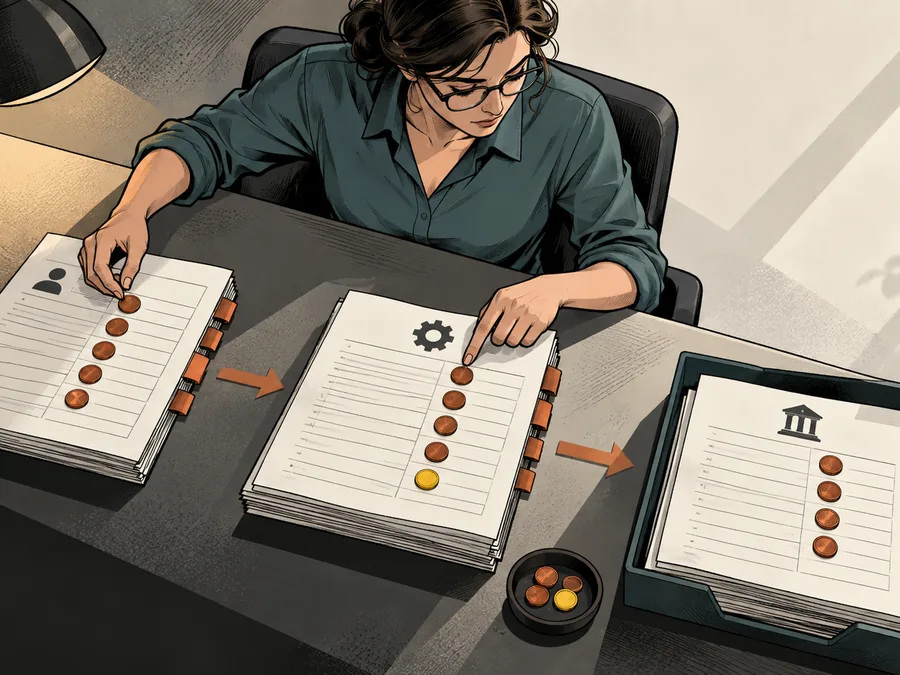
Those controls do not mean a player will receive the studio video on request. They do mean the dispute should not depend solely on a screenshot of a frozen phone. The operator and supplier should be able to correlate the customer account with the table, round, wager, recorded outcome and settlement.
The same principle appears in post-launch control. Our explainer on casino game monitoring separates a product-wide performance problem from a specific transaction fault. An interruption complaint begins with the specific transaction; repeated incidents can become a monitoring signal.
For the customer or support team, a useful incident record includes:
the game and table name;
the date, exact time and time zone;
the stake and selection;
the balance before and after the round;
any round, game or transaction identifier visible in history;
what was still happening when the connection failed;
screenshots or screen recordings, if available.
The image helps reconstruct what the player saw. The account and game logs establish what the system accepted and settled.
What a fair interruption policy should answer
RTS 10 requires operators to make information about interruption policies available for common scenarios. It does not require a public catalogue of every possible failure. A useful policy should still let a reader answer four questions without guessing:
How can the customer tell whether a wager was accepted?
What happens when a completed live result needs no further player decision?
What happens when a card hand or other stateful game still requires a choice?
Where can the customer find the round record and challenge a settlement?
If the help page only says “check your connection”, it explains troubleshooting but not the financial treatment. If it only says “malfunctions void all play”, it may still leave the acceptance and restoration stages unclear. The rules need to connect the technical incident to the wager state.
For operators, that connection also crosses company boundaries. The consumer brand owns the account and support conversation, while a live-game supplier may hold table and round evidence. Reconciliation between separate records is familiar elsewhere in the stack; our guide to iGaming payment reconciliation explains why two systems can describe the same transaction on different clocks.
What to check before assuming refund or loss
Start with the game history and account balance after reconnecting. Look for an accepted wager, round identifier and final status. Then read the operator’s general interruption policy and the rules inside the specific game. If the hand required another decision, identify the fallback action rather than assuming the whole round was cancelled.
If the entries do not reconcile, send support the smallest complete incident package: game, table, timestamp with time zone, stake, selection, displayed balance and any identifier. Ask whether the wager was accepted, whether the round was completed or voided, and which rule controlled the treatment.
The key is not whether the video froze. It is whether the wager crossed acceptance, whether the player still had influence and whether the round remained valid. Once those three facts are separated, “what happened to my bet?” becomes an auditable question instead of a guess about the screen.