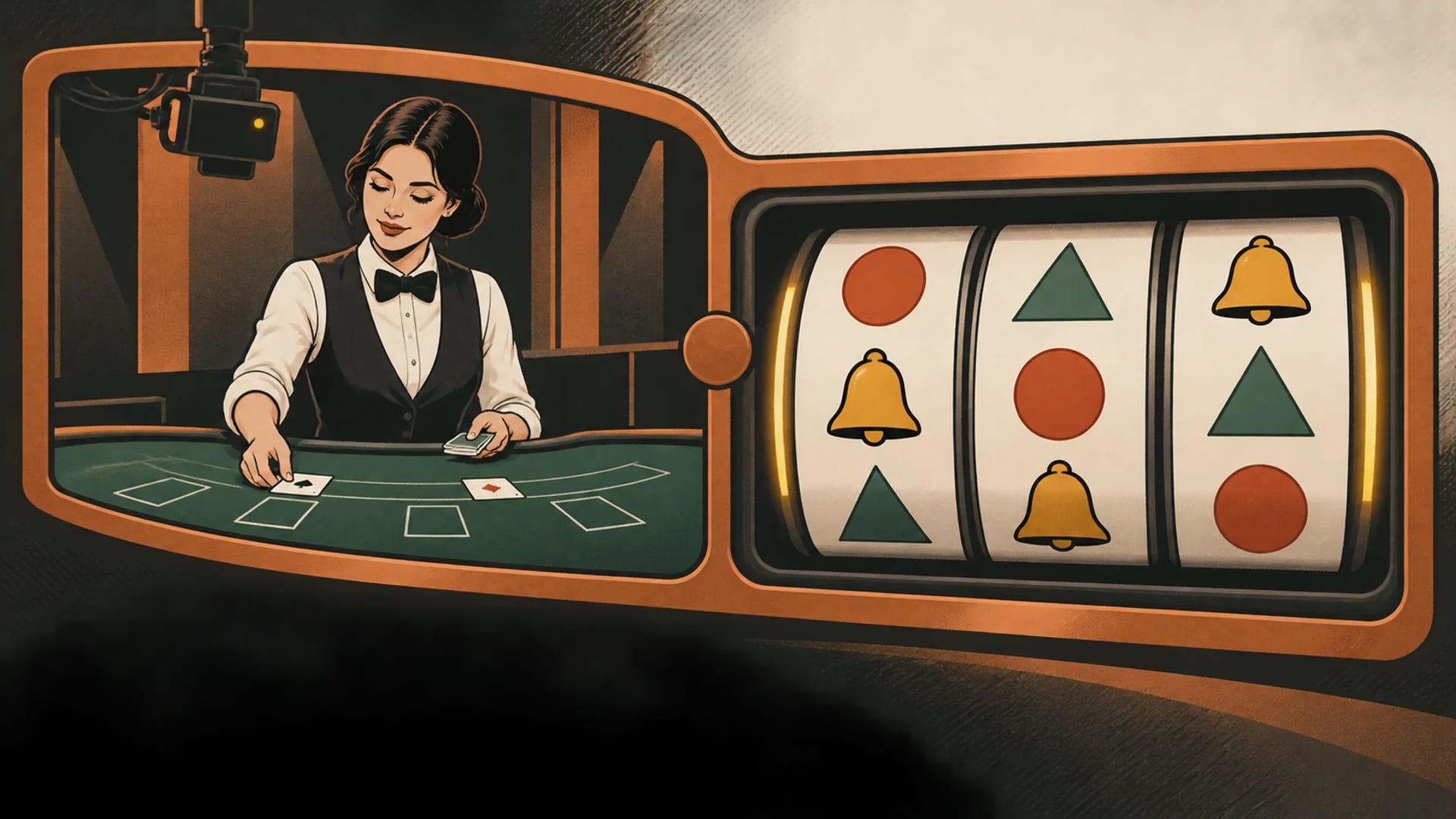
Monopoly can sit on a casino floor, appear inside an online slot and give a live presenter a set to work in. The name survives each move. The permission to use it belongs to a particular deal.
Hasbro's casino licensing announcement of 1 July 2025 divided the work among several partners. Evolution received online live-casino and slot rights; Aristocrat's category was land-based slot machines; Galaxy Gaming's was casino table games. Bally's appeared separately as an online casino operator. Hasbro's partner announcement
For people commissioning casino content, that division explains why an exclusive agreement can coexist with several companies selling games under the same entertainment brand. The licensed format matters. A familiar name on a cabinet or screen does not identify the supplier for every other version.
The exclusive right has a category attached
Evolution described its agreement as a multi-year, exclusive partnership for online live casino and slots based on Monopoly and other Hasbro Games titles. It called the deal worldwide, including the United States, and said it covered content across its brands. The announcement did not publish a royalty rate or an exact expiry date. Evolution's agreement announcement
That gives an editor a precise way to describe the transaction: a brand owner granting specified commercial permissions to a developer. Intellectual property, or IP, means the protected material behind the name and design. Here, the licensor is Hasbro. Evolution is the licensee for the announced online categories.
Hasbro's July 2025 category allocation:
| Partner named by Hasbro | Announced casino category | Role |
|---|---|---|
| Evolution | Online slots and live casino | Business-to-business developer |
| Aristocrat Technologies | Land-based slot machines | Business-to-business manufacturer |
| Galaxy Gaming | Casino table games | Developer and manufacturer |
| Bally's | Online casino | Consumer-facing operator |
These are the categories in the public announcement, not a reconstruction of confidential contracts. The table cannot settle an unusual hybrid product, a sublicensing arrangement or an individual operator's entitlement. Those require the applicable terms.
It also avoids confusing an IP licence with the acquisition of a studio. Our account of why Evolution bought slot studios follows ownership of game-making businesses. Licensing Hasbro material is a different transaction: the supplier obtains permission to use protected entertainment properties in the agreed formats.
The board becomes a wheel and a broadcast
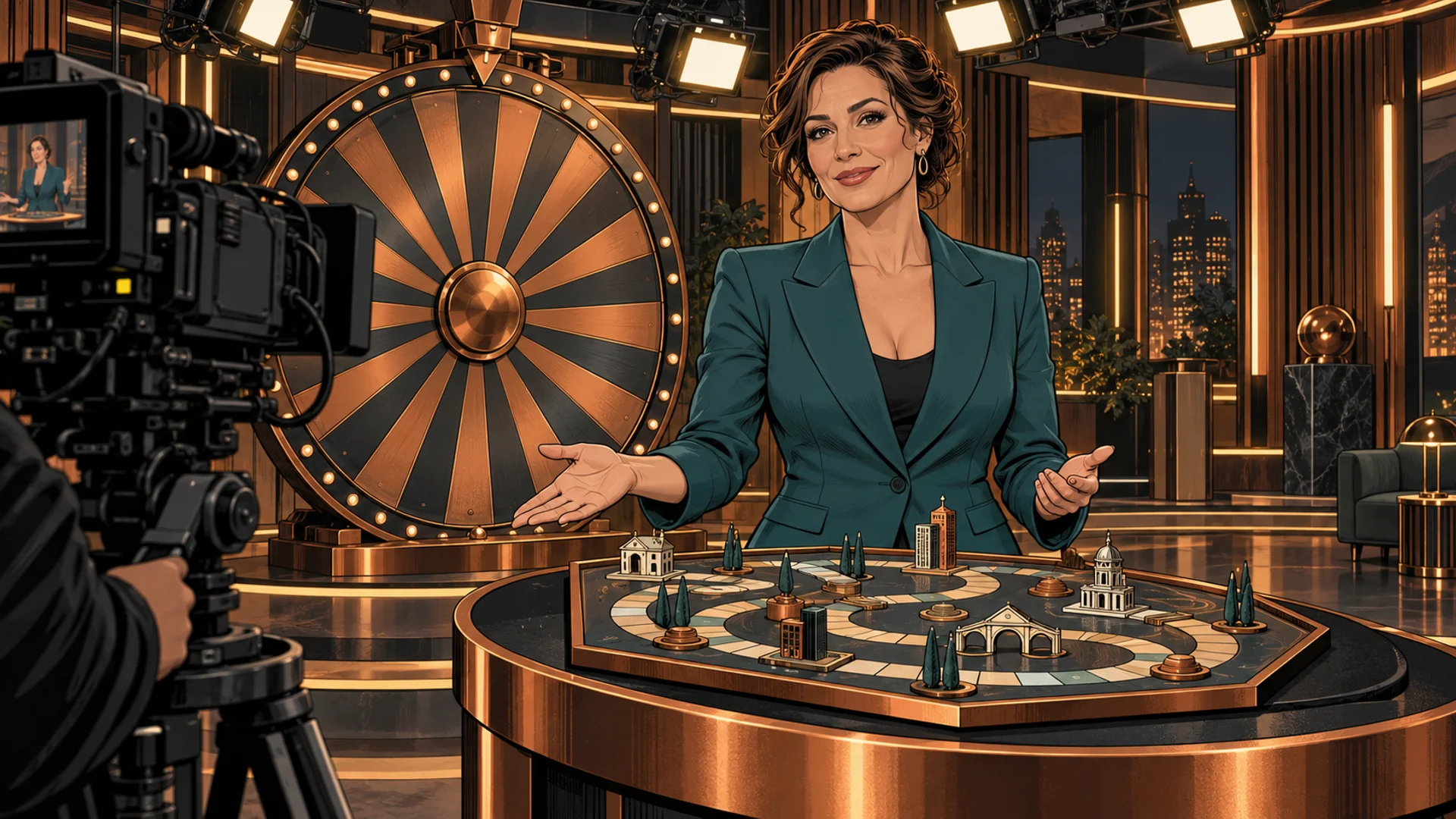
Monopoly Live shows how far an adaptation can move from the tabletop original. Evolution's product description starts with a presenter spinning a wheel. Certain results lead into a bonus board sequence; dice are rolled in the studio, while a virtual character moves around the displayed board. The page identifies the board design, character and other distinctive elements as Hasbro trademarks used with permission. Monopoly Live product description
That combination gives the familiar property a different job. Board imagery supplies recognisable places and movement, while the wheel supplies the main casino round. Someone who knows the family game still needs the casino game's rules to understand what a wager covers.
The creative question is therefore more demanding than choosing a recognisable picture for a tile. Which elements of the original survive the change of medium? Which become scenery, and which affect the game? A live presenter can guide the broadcast, but the approved rules determine the result and payment.
The production responsibilities extend beyond the brand owner. Our guide to who makes an online casino game separates the licensor from the studio, server and operator. A permission line in the credits tells us why protected material can appear; it does not describe the entire production or customer relationship.
A January preview is not a release receipt
Evolution's July 2025 agreement announcement said new games would arrive from January 2026. Its ICE Barcelona release of 19 January 2026 still described Monopoly Filthy Rich, Monopoly Roulette and Game Night as upcoming titles being previewed. That wording establishes a development and exhibition programme, not that every named title was already available to customers. Evolution's ICE announcement
On 18 June 2026, Evolution announced that Monopoly Live was streaming from its new Grand Rapids studio in Michigan, following launches in New Jersey, Delaware and Connecticut. This is a named product entering named markets, rather than a promise about the whole Hasbro portfolio. Michigan launch announcement
The distinction matters even when the rights agreement says worldwide. Commercial rights and access to a regulated market answer different questions. A reader assessing a launch needs the title, territory and actual availability date. Our reporting on local live-casino studios explains why the production location can be part of that last step.
The same name reaches different casino products
There is evidence of released content outside that live-show route. Big Time Gaming's official Monopoly Deluxe page lists the game as a slot with a 2026 release year and acknowledges Hasbro's permission. Its site also warns that demo access and individual features depend on jurisdiction. The listing identifies a product; it is not a directory of every casino carrying it. Monopoly Deluxe product page
On the physical floor, Aristocrat's release dated 15 April 2026 reported the debut of Monopoly Big Board Bucks at Yaamava' Resort & Casino. It identified the title as its first release under the new Hasbro partnership and named The Baron Portrait cabinet. The webpage carries a 16 April publication label; the release itself supplies the earlier dateline. Aristocrat's debut notice
Galaxy supplied another format. Its 14 May 2026 announcement reported the debut of Monopoly Table Games Progressive at Pechanga Resort Casino in California and described Galaxy as the exclusive Monopoly table-games licensee. Galaxy describes a feature that randomly selects qualifying hands and applies multipliers. That table-game addition is a separate product from a presenter-led online show or slot cabinet. Galaxy's Pechanga announcement
These examples expose the weakness of treating the brand as the product specification. It tells the audience what imagery to expect. It cannot, by itself, tell an operator which supplier, delivery system or game rules it would be buying.
The brand deal leaves work unfinished
Permission from a rights owner does not replace a gambling software assessment. In Great Britain, the Gambling Commission says software supplied under its operating licences must meet the remote technical standards and the applicable testing requirements. That is a separate regulatory obligation from permission to adapt an entertainment property. Gambling Commission technical standards
The commercial result needs its own evidence too. The companies' announcements establish agreements, product descriptions and particular launches. They do not disclose title-level royalty payments or demonstrate that the brand caused higher retention. Supplier praise for a game's performance should remain attributed until a defined measure and comparison support it.
An operator commissioning a Monopoly game needs the licensed category and the particular release's eligible markets in its brief. An editor assessing that product needs to distinguish the agreement announcement from a preview and a launch notice. A June Michigan stream, an April cabinet debut and a slot's 2026 catalogue entry provide different evidence, even when the same name appears on all three.